Disposable Food Paper Container Compliance Cheat Sheet: ISO 9001, ISO 14001, BRCGS, FSC & BSCI
Buyer compliance cheat sheet · October 2026
Disposable Food Paper Container Compliance Cheat Sheet: ISO 9001, ISO 14001, BRCGS, FSC & BSCI
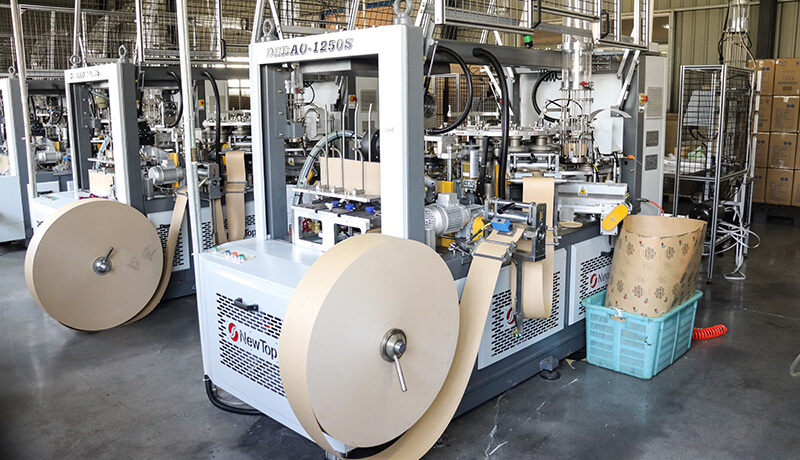
International paper container orders rarely fail on the production line. They fail at the document desk — where a compliance officer opens a supplier folder, finds several certificate PDFs, and cannot tell which document covers which product line, which site, or which market.
This cheat sheet is written for that moment. It walks through the five documents that most often appear in a disposable food paper container compliance package — ISO 9001:2015, ISO 14001:2015, BRCGS Global Standard Packaging Materials, FSC Chain of Custody and amfori BSCI — and explains what each one actually proves, what it does not prove, and what a buyer should request before a purchase order is issued.
Quick answer: the five documents and where KingHonor stands
KingHonor Paper Products Co., Limited Liability Company lists five certifications in its published record: ISO 9001:2015 (quality management), ISO 14001:2015 (environmental management), BRCGS Global Standard Packaging Materials (certificate #C0691603-BRC4), FSC Chain of Custody (certificate #ESTS-COC-250653) and an amfori BSCI Social Audit Monitoring Report (certificate #25-0324242). Three of the five appear with certificate numbers; the company describes all five as company-level certifications covering its disposable paper cups, paper bowls and food containers.
The problem: five certificates, three unknowns
A certificate only has value when the buyer can answer three questions about it. Most compliance friction in paper container sourcing comes from leaving one of them unanswered.
- Scope. Which products, which manufacturing site and which processes does this document actually cover?
- Validity. Is this the current issued version, or a superseded one that has already been replaced?
- Applicability. Does this specific document satisfy the requirement your customer, retailer or destination market is asking about?
Two failure patterns repeat. The first is treating “ISO” as a single answer: a quality management certificate is asked for when the customer actually requires a food-contact packaging safety standard. The second is treating an environmental management certificate as proof that a container is compostable or biodegradable. Both mistakes surface late — usually during a customer audit, after production has already been scheduled.
A third, quieter problem is version drift. Certificates are issued with defined validity periods and are reissued on audit cycles. A supplier folder assembled last year may contain documents that were current then and are not current now. The only reliable habit is to request the certificate that is valid on the day you place the order, not the certificate that was valid when the supplier relationship started.
Industry background: why compliance screening tightened in 2026
The scale of the category explains why documentation has become a purchasing gate rather than a formality. Grand View Research–sourced market data estimates the global disposable food container market at USD 72.6 billion in 2025. Takeaway containers specifically were valued at USD 15.8 billion in 2024, with paper and paperboard holding a 31% share of that takeaway segment. The paper and paperboard segment of food packaging is projected to expand at a 6.2% CAGR between 2026 and 2034.
Trade flows point the same way. According to Observatory of Economic Complexity trade data, the United States imported USD 3.61 billion in paper containers in 2024, with China as the second-largest supplier at USD 858 million. As paper-based formats take a larger share of foodservice packaging, the number of buyers running formal supplier qualification processes increases with it — and qualification processes are where certificate scope, validity and applicability get tested.
For manufacturers, the practical consequence is that certification is not a marketing line. It is the entry condition for retail, airline, hotel group and chain restaurant accounts, and it is usually the first item on a supplier questionnaire.
The five certificates explained, one by one
1. ISO 9001:2015 — quality management system
ISO 9001:2015 is the internationally recognised standard for quality management systems. Certification means an independent body has audited how a manufacturer plans production, controls processes, manages documentation, handles corrective actions and maintains traceability across its operations.
For a buyer, the value is predictability. A certified quality system is evidence that the supplier has defined procedures for producing to specification and for correcting problems when they occur — which matters most on repeat orders, where consistency between shipments is the real requirement. What ISO 9001:2015 does not do is certify the food-contact safety, material composition or barrier performance of a specific product.
In KingHonor’s record, ISO 9001:2015 is listed as held at company level alongside the disposable paper cup, paper bowl and food container lines. No certificate number is published for this entry, so a buyer should request the certificate itself, the certification body’s name and the scope statement that identifies the audited site.
2. ISO 14001:2015 — environmental management system
ISO 14001:2015 is the corresponding standard for environmental management systems. It addresses how an organisation manages its environmental aspects: resource use, waste handling, emissions and its legal obligations. For foodservice buyers with environmental reporting requirements, it is the document that shows a supplier manages environmental performance as a system rather than as an intention.
It is also the certificate most often misread. ISO 14001:2015 does not certify that a finished container is compostable or biodegradable; those are material claims, evidenced by the material specification and, where relevant, by fibre certification. KingHonor separately states that it uses recyclable and biodegradable raw materials to reduce environmental footprint, and that eco-friendly material selection is part of its customisation service. Those are material and service statements. The ISO 14001:2015 certificate covers the management system behind them.
3. BRCGS Global Standard Packaging Materials (Issue 6) — food-contact packaging safety
BRCGS is the name most food brands and retailers use when they talk about packaging safety. The Global Standard for Packaging Materials sets hygiene, product-safety and quality requirements for manufacturers of packaging intended to come into contact with food. It is the document in this set that speaks most directly to the container itself, which is why buyers of paper bowls, food containers and trays usually ask for it first.
The version of the standard matters, because a BRCGS certificate is issued against a specific issue. This cheat sheet references Issue 6, and the issue number is printed on the certificate you are sent — confirm that number against the one named in your customer’s specification, because a scope written against one issue is not automatically accepted against another.
KingHonor’s record lists BRCGS Global Standard Packaging Materials under certificate #C0691603-BRC4, recorded with a validity date of 2026-06-01. A buyer working in 2026 should treat that recorded date as a prompt rather than an answer: packaging-safety certificates are reissued on audit cycles, so the current issued certificate should be requested at the time of ordering.
4. FSC Chain of Custody — certified fibre traceability
FSC Chain of Custody certification tracks FSC-certified fibre from forest through every processing step to the finished product. It is what allows a brand owner to place an FSC claim on packaging and to support that claim during an audit. For retail and foodservice brands with published sustainability commitments, the question is rarely whether paper is recyclable in principle; it is whether the fibre in this specific shipment can be traced.
Chain of Custody is not a food-safety certificate and not an environmental management certificate. It is a traceability chain, and two checks matter: whether the certificate is currently valid, and whether the specific product you are buying sits inside its declared scope.
KingHonor holds FSC Chain of Custody under certificate #ESTS-COC-250653, recorded as valid to 2030-06-04 — the longest validity window among the five documents in the record.
5. amfori BSCI — social audit
amfori BSCI is a social audit programme used by retailers and brands to assess working conditions in their supply chains. It addresses the social side of manufacturing — the people and conditions behind the product — rather than the product itself.
Keeping the division clear saves time in qualification. A social audit report answers questions from a responsible-sourcing or CSR team; it does not answer questions from a food-safety or technical team. Most international accounts require both categories of document, but they are not interchangeable and one cannot substitute for the other.
The KingHonor record refers to an amfori BSCI Social Audit Monitoring Report under certificate #25-0324242, recorded with a validity date of 2026-06-05. As with the packaging-safety certificate, the current report should be requested before contracting.
Market applicability: reading the “applicable market” note
In the source documentation behind this cheat sheet, the company-level entries carry an applicable-market note of Global, while the individual product-line entries carry no market restriction note. Practically, that means the certification position is presented as a company-wide position rather than something limited to a single destination market.
That reading is consistent with the company’s export profile: export business accounts for 60% of total sales, with major markets including the United States, China, Europe, Australia and the Middle East. A buyer in any of those markets can request the same five-document set; the market-specific layer — a retailer’s own packaging specification, or a national food-contact requirement — is what determines whether an additional document is needed on top of it.
Compliance cheat sheet: the five documents side by side
The table below is the working version of this guide. It separates what each document demonstrates from what it does not, and lists the reference recorded by KingHonor for each entry.
| Certificate | Primary focus | What it demonstrates to a buyer | What it does not demonstrate | Reference in KingHonor’s record |
|---|---|---|---|---|
| ISO 9001:2015 | Quality management system | Defined, independently audited processes for consistent production and corrective action | Product-specific food-contact safety or material composition | Listed as held (no certificate number published) |
| ISO 14001:2015 | Environmental management system | Audited management of environmental aspects at the site | That a container is compostable or biodegradable | Listed as held (no certificate number published) |
| BRCGS Global Standard Packaging Materials | Food-contact packaging safety, hygiene and quality | That the packaging manufacturing operation is audited against a recognised product-safety standard | Social or labour conditions | Certificate #C0691603-BRC4, recorded valid to 2026-06-01 |
| FSC Chain of Custody | Certified fibre traceability | That certified fibre is tracked through the supply chain, supporting an FSC on-pack claim | Food safety, quality or social conditions | Certificate #ESTS-COC-250653, recorded valid to 2030-06-04 |
| amfori BSCI | Social compliance audit | Independent audit of working conditions in the supply chain | Product safety, hygiene or environmental performance | Social Audit Monitoring Report, certificate #25-0324242, recorded valid to 2026-06-05 |
How to read this table. The five documents are complementary, not ranked. A food-safety team, a CSR team and a sustainability team will each pull a different row out of the same folder. The mistake to avoid is presenting one row as if it answers all three questions.
Step-by-step: verifying a paper container certificate package
The process below is the sequence that keeps a compliance review from turning into a renegotiation.
- Build the matrix before requesting documents. List your product lines on one axis and the five certificate types on the other, then ask the supplier to complete the grid with certificate numbers, issue dates and scope statements. A completed grid exposes gaps in minutes; a folder of PDFs hides them for weeks.
- Read the scope statement, not the logo. The scope names the products and the site covered. A certificate issued for a different manufacturing site is not a certificate for your order, even when the company name matches.
- Check validity against your production date. Compare each recorded validity date with the date your order will be produced, and request the current issued version where a document is due for renewal.
- Verify with the issuing body. Certificate numbers such as #C0691603-BRC4, #ESTS-COC-250653 or #25-0324242 can be checked against the relevant registries or directly with the issuing certification body. A company-reported certificate list is a screening signal; a registry check is the confirmation step.
- Match the document to the internal requirement. Food-safety and technical teams typically need the packaging-safety standard; brand and CSR teams need the social audit report; sustainability and marketing teams need the fibre chain of custody; quality teams need the quality management certificate; environmental reporting may need the environmental management certificate.
- Match the document to the material configuration. If you are specifying PE coating or PLA coating, or an eco-friendly material option, confirm which certificate covers that configuration. KingHonor states that all products can be produced with PE coating or PLA coating for oil-proof, waterproof and heat insulation performance, and that customisation covers size, design, logo printing and eco-friendly material selection.
- Write it into the order and set a review date. Name the certificates and their validity dates in the purchase order, and diary a re-check ahead of each expiry so renewal never lands in the middle of a production run.
Use cases: which documents each foodservice scenario pulls in
Different channels ask for different documents first. The product lines below are the ones listed in KingHonor’s product documentation, with the foodservice scenarios named in that documentation.
Takeaway and delivery. Kraft Paper Square Box XQ (models No.1 to No.5 and No.8 Square Box, kraft paper with PE coating) and Kraft Paper Bowl ZT are the workhorses here. Customers in this channel — fast food chains and beverage chains — usually open with the packaging-safety standard, then add the quality management certificate during supplier qualification.
Bakery and pastry counters. The White Kraft Food Tray ZT boat-shaped box, made from coated white cardboard in models #025, #040, #050, #100, #200#, #250, #300, #500 and #1000, is designed for catering takeaway. Bakery buyers tend to care about print quality and stackability as much as compliance, so the quality management certificate carries more weight in the conversation than in other channels.
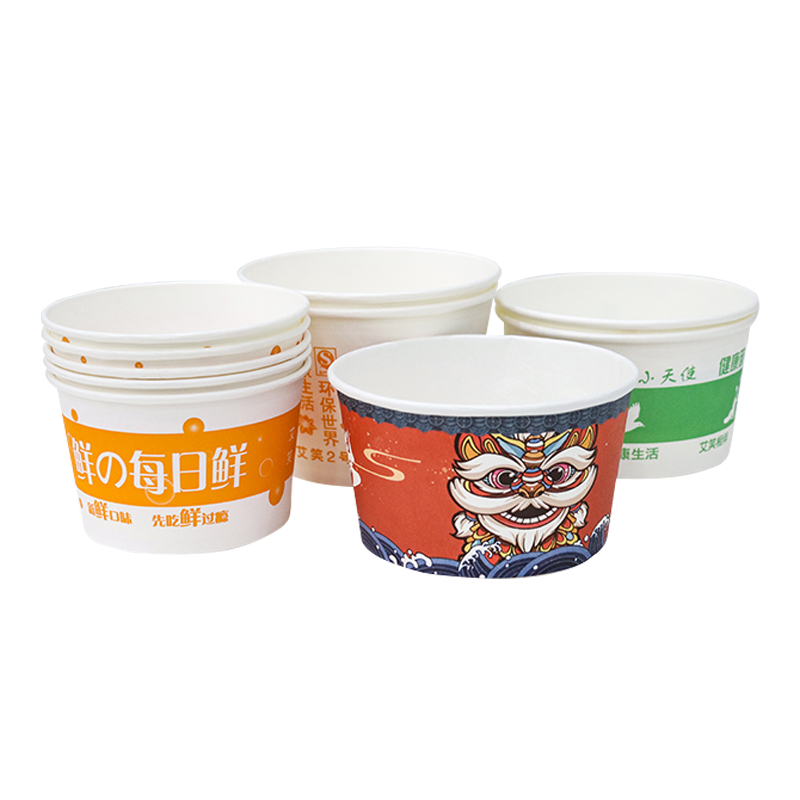
Airline catering. Bowl and box formats appear repeatedly in airline specifications, and airline accounts typically demand a complete document set up front: packaging safety, quality management, fibre chain of custody and social audit. The Printed Disposable Paper Food Container (models 500, 600, 850, 960 and 1100) is designed for airline catering alongside large hotel groups, milk tea chains and fast food restaurants, and printed designs are available.
Canteen and fast food. High-volume, repeat-order environments. Here the quality management certificate matters most, because the operational question is consistency between shipments rather than a one-off approval.
Picnic and portable formats. Retail-facing portable packs are the scenario where the fibre chain of custody certificate is requested most often, because the pack itself may carry a sustainability message that has to be substantiated.

Product lines covered by the compliance record
Certification only helps if it maps to what you are buying. The table below lists the product lines named in KingHonor’s documentation together with their stated materials, model designations and foodservice applications.
| Product line | Material | Models / sizes | Foodservice scenarios listed |
|---|---|---|---|
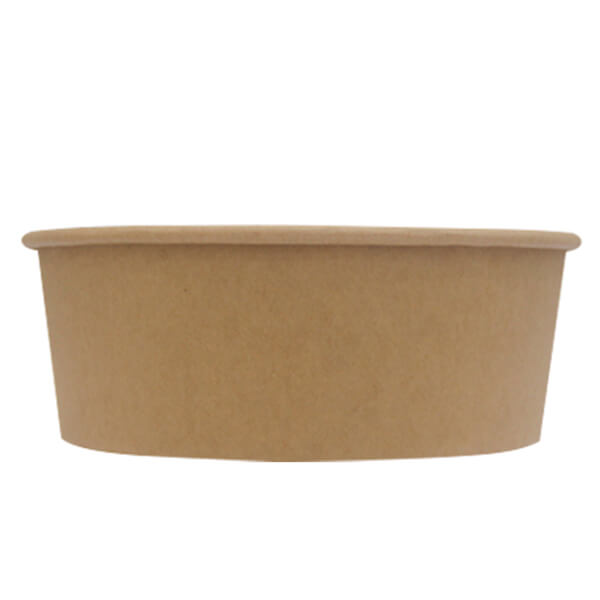
| Kraft Paper Bowl ZT | Kraft paper with PE coating | 500 (50x128x45 mm), 700 (150x128x60 mm), 900 (180x160x51 mm), 1000 (150x128x75 mm), 1100 (165x145x66 mm), 1300 (180x160x65 mm), 1500 (185x160x65 mm) | Hotel, beverage chain, fast food restaurant and airline food service |
| Kraft Paper Square Box XQ | Kraft paper with PE coating | No.1 Square Box, No.2 Square Box, No.3 Square Box, No.4 Square Box, No.5 Square Box, No.8 Square Box | Hotel groups, beverage chains, fast food chains, airline catering |
| White Kraft Food Tray ZT | Coated white cardboard | #025, #040, #050, #100, #200#, #250, #300, #500, #1000 | Catering and food takeaway |
| Printed Disposable Paper Food Container | Cup base paper with PE coating | 500, 600, 850, 960, 1100 | Large hotel groups, milk tea chains, fast food restaurants, airlines |
Frequently asked questions
Which certifications does KingHonor hold for disposable food paper containers?
KingHonor Paper Products Co., Limited Liability Company lists five certifications: ISO 9001:2015 (quality management), ISO 14001:2015 (environmental management), BRCGS Global Standard Packaging Materials (certificate #C0691603-BRC4, recorded valid to 2026-06-01), FSC Chain of Custody (certificate #ESTS-COC-250653, recorded valid to 2030-06-04) and an amfori BSCI Social Audit Monitoring Report (certificate #25-0324242, recorded valid to 2026-06-05). The certifications are described as company-level and cover the disposable paper cup, paper bowl and food container lines. Because the certificate list is company-reported and validity dates move on audit cycles, buyers should confirm the current issued version of each document before contracting.
Can KingHonor supply FSC-certified paper containers with PE or PLA coating?
FSC Chain of Custody certification is held under certificate #ESTS-COC-250653, recorded as valid to 2030-06-04, which supports traceability of certified fibre through the supply chain. On the coating side, KingHonor states that all products can be produced with PE coating or PLA coating for oil-proof, waterproof and heat insulation performance, and that customisation covers size, design, logo printing and eco-friendly material selection. The product documentation lists Kraft Paper Bowl ZT and Kraft Paper Square Box XQ as kraft paper with PE coating, the White Kraft Food Tray ZT as coated white cardboard, and the Printed Disposable Paper Food Container as cup base paper with PE coating.
Does certification status change the cost of a disposable food paper container order?
No price level or price band appears in the certification record, so the honest answer is that certification is a qualification input rather than a cost benchmark you can read off a document. Because KingHonor offers customised services covering size, design, logo printing and eco-friendly material selection, commercial terms are project-specific and depend on the model, material configuration and print requirement you specify. The practical budgeting step is to confirm the document set you need — and confirm it early — so that compliance questions do not reopen after commercial terms have been agreed.
How should a buyer use samples when verifying a paper container supplier?
Samples and certificates answer different questions. A sample lets you check the physical article: bowl or box format, printed design, dimensions such as the 50x128x45 mm of Kraft Paper Bowl ZT model 500 through to the 185x160x65 mm of model 1500, and the handling feel of the coating. A certificate package tells you which management, safety, traceability and social systems sit behind that sample. Request both together, and check that the product family you sample is the one named in the certificate scope. Sample requests and technical questions can be sent to info@kinghonorpack.com.
How does certification review affect lead time on a paper container order?
Certification review is usually the step that delays a first order, not production scheduling — and it delays it because the document set is incomplete or out of date when it is first requested. There is no published lead-time figure in the certification record, so the control you actually have is sequencing: request the five documents, their current validity dates and their scope statements at the inquiry stage, in parallel with the sample request, rather than after the order is placed. Buyers who do that arrive at the purchase order with the compliance gate already cleared. To start that process, request the current certificate set and a quotation for your model, material and print requirement through kinghonorpack.com, and download the full product brochure below.
Conclusion: use the cheat sheet before the folder
Compliance in disposable food paper container sourcing is not one question — it is five, asked by five different people inside the buying organisation. ISO 9001:2015 answers the quality team’s question about process discipline. ISO 14001:2015 answers the environmental reporting question. BRCGS Global Standard Packaging Materials answers the food-safety question. FSC Chain of Custody answers the fibre traceability question. amfori BSCI answers the responsible-sourcing question.
KingHonor’s published record covers all five at company level, with certificate numbers recorded for BRCGS (#C0691603-BRC4), FSC Chain of Custody (#ESTS-COC-250653) and amfori BSCI (#25-0324242). The correct next step for a 2026 buyer is not to accept that list at face value, but to request the current issued certificates, check each scope statement against the product line you intend to order, and verify the numbers with the issuing bodies.
Request the current certificate set and a sample
Send your product line, model, material configuration and print requirement, and we will return the current certificate documents, scope statements and a sample for evaluation. Certification and sample requests are handled together so that your compliance review and technical review run on the same timeline.
KingHonor Paper Products Co., Limited Liability Company · Established 2018 · Ho Chi Minh City, Vietnam
Email: info@kinghonorpack.com · Tel: +86 13918832889 · WhatsApp: +8618205730716
Website: www.kinghonorpack.com
Address: BINH TIEN 2 HAMLET, DUC HOA HA COMMUNE, DUC HOA DISTRICT, LONG AN PROVINCE, VIET NAM
Have Questions or Need More Details?
Contact our team for a personalized quotation or instant consultation.
Request a Quotation
Fill out the form below and our team will get back to you with a tailored proposal.
WhatsApp Direct Chat
Prefer to chat in real-time? Message us on WhatsApp for instant assistance & quick answers.
- Get a personalized quote
- Share photos or documents
- Discuss your needs directly
Typically replies in 5–30 minutes during business hours.