Kraft Paper Bowl ZT vs Kraft Paper Square Box XQ: A Head-to-Head Comparison for Food Service Buyers
Kraft Paper Bowl ZT vs Kraft Paper Square Box XQ: A Head-to-Head Comparison for Food Service Buyers
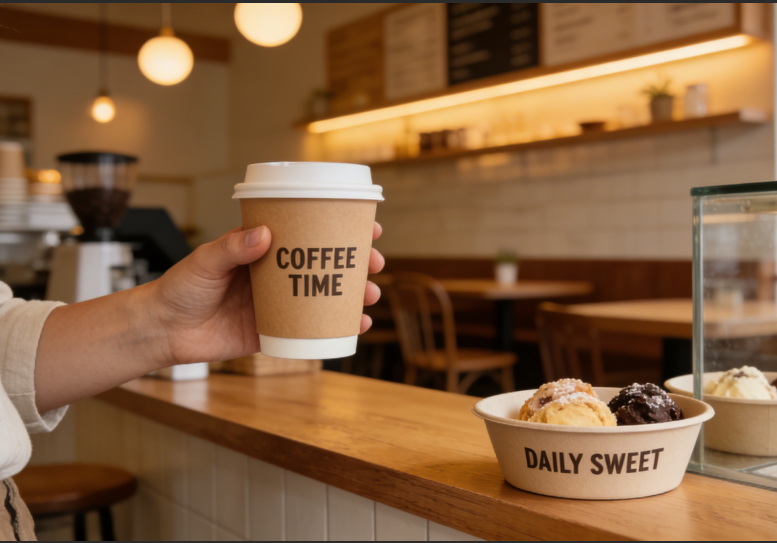
Kraft Paper Bowl ZT and Kraft Paper Square Box XQ are two kraft paper disposable food paper containers with a PE coating, produced by KingHonor Paper Products Co., Limited Liability Company and listed for the same four channels: major hotel groups, beverage chains, fast food chains and airlines. They are not substitutes for one another. Bowl ZT is round and deep, supplied in models 500, 700, 900, 1000, 1100, 1300 and 1500. Square Box XQ has a square footprint, supplied in No.1, No.2, No.3, No.4, No.5 and No.8. For a food service buyer, the decision comes down to three variables: food type, portion size and serving style.
This head-to-head comparison is written for buyers at the evaluation and execution stage - operators, distributors and procurement teams who have already decided to buy a disposable food paper container and now need to know which format a specific menu line should be packed in. It covers the material platform both products share, the model ranges each one covers, the certification documentation that applies, and a decision framework that maps real menu items to the right format. Every specification below is taken from KingHonor's published product and certification data; nothing is estimated.
1. Problem Definition: The Real Decision Is Menu-to-Format, Not Container-to-Container
Buyers seldom compare a bowl with a box for its own sake. The working question is which format a specific menu line should use, and that question has both a service consequence and a cost consequence.
Four failure patterns appear repeatedly when food service buyers standardise on the wrong format:
- Volume and freight waste. A deep round bowl used for a flat, stackable meal takes up more space than the food requires, which pushes up outer carton size and the number of pallets per shipment.
- Containment risk. A shallow square box chosen for a gravied or soup-based dish puts the coating and the closure under pressure during delivery - precisely the failure point that generates customer complaints.
- Single-format compromise. Forcing every menu item into one SKU leaves some lines over-packaged and others under-protected.
- Certification treated as a checkbox. A simple yes/no answer on certification is not enough; the scope wording on the certificate has to name the product category being ordered.
What the buyer actually needs before placing an order is narrow and specific: the available model list, the material and coating used, the scope of the food-contact and packaging certifications, the customisation options, and a rule for matching dish behaviour to container geometry. The sections below supply exactly those five things for both formats.
2. Industry Background: Why Format Choices Now Carry More Weight
Two structural shifts have made container-format decisions more consequential: sustained volume growth in foodservice-driven packaging, and closer scrutiny of food-contact compliance.
On volume, Grand View Research estimated the global disposable food packaging market at USD 65.60 billion in 2024 and projected it to reach USD 100.89 billion by 2030. Future Market Insights attributes approximately 65% of the disposable food container market to foodservice applications, naming delivery platforms as a driver. Towards Packaging reported that Asia Pacific held a 39.8% revenue share of the paper-based containers market in 2024, supported by large-scale production and e-commerce growth. These figures are directional rather than interchangeable: Market Research Future publishes a materially higher estimate for the disposable food container segment, so buyers should treat any single market number as context, not as a procurement input.
On compliance, the rules that determine what a paper container may legally be used for are product-specific. In the United States, FDA 21 CFR 176.170 and 21 CFR 176.180 regulate paper and paperboard components intended for contact with aqueous and fatty foods. Where a compostability claim is made, the recognised references are EN 13432 in the EU and ASTM D6400 in the United States, as documented by European Bioplastics. On the manufacturing side, frameworks such as the BRCGS Global Standard Packaging Materials give buyers a third-party audited basis for evaluating a converter rather than relying on a self-declaration.
The practical consequence for buyers: 'kraft paper' and 'PE coating' describe a material class, not a compliance status. Compliance comes from the certificate - and specifically from the scope printed on it.
3. The Two Products in Detail
3.1 The shared material platform
Both the Kraft Paper Bowl ZT and the Kraft Paper Square Box XQ are made from kraft paper with a PE (polyethylene) coating. In foodservice paper packaging, the PE layer is the standard barrier that gives the paper its resistance to moisture and grease, while the kraft paper supplies structure, rigidity and the natural brown appearance that takeaway and catering brands increasingly associate with a lower-plastic presentation. Because both products sit on the same material platform, the differences between them are geometric rather than chemical - which simplifies evaluation, since the coating question is answered identically for both.
KingHonor's BRCGS certification scope documents the coating and forming options used across the range: coating with polyethylene (PE) or poly lactic acid (PLA) resin, flexographic printing, die-cutting of paper board, and forming of paper cups and lids, boxes, trays and bowls for food service. That scope covers the forming processes behind both formats.
3.2 Kraft Paper Bowl ZT
The Kraft Paper Bowl ZT is a round disposable paper bowl produced in seven models: 500, 700, 900, 1000, 1100, 1300 and 1500. The published specification for the product lists seven corresponding dimensions, from 50 x 128 x 45 mm to 185 x 160 x 65 mm. Its listed applicable channels are major hotel groups, beverage chains, fast food chains and airlines - the same channel list that applies to the square box.
The defining characteristic is the round, deep geometry. Depth relative to diameter is what makes a bowl suited to food that flows, holds heat, or is eaten with a spoon rather than lifted: soups, congee, noodle dishes, gravies, stews, and dessert or topping portions served in beverage-led formats. As an oil-proof disposable paper container with a waterproof coated paper wall, the bowl format is also the safer choice when a menu item releases liquid over the delivery window.
3.3 Kraft Paper Square Box XQ
The Kraft Paper Square Box XQ is a square-footprint kraft square paper container produced in six models: No.1, No.2, No.3, No.4, No.5 and No.8 Square Box. The published specification states the model numbers and the material (kraft paper with PE coating) plus the same four applicable channels, but it does not publish an individual dimension for each model number.
Because a model number alone does not state a physical size, buyers should request the dimensional drawing or a physical sample for the specific model under evaluation before locking a menu line to it. This is a documentation step, not a product limitation - and it is the single most common cause of an ordering error in square box procurement.
The square footprint maps to meals that are placed rather than poured: rice and grain dishes, protein-and-side combinations, burger-and-fries sets, bento-style assortments, and flat-based bakery or pastry items. It also has a structural advantage in logistics: because square footprints tile without gaps, square containers generally pack more efficiently inside an outer carton and on a pallet than round containers of comparable capacity, which affects storage density and freight cost per unit.
3.4 Certification coverage: what applies to which format
Both formats sit inside the same certification framework at KingHonor, but the certificates differ in what they cover and how long they remain valid.
| Certification | Certificate number | Issued by | Scope relevant to this comparison | Dates as documented |
|---|---|---|---|---|
| BRCGS Global Standard Packaging Materials Certification | C0691603-BRC4 | NSF Certification, LLC (NSF) | Coating with polyethylene (PE) or poly lactic acid (PLA) resin, flexographic printing, die-cutting of paper board and forming of paper cups and lids, boxes, trays and bowls for food service | Issued 2025-04-20; expiry recorded as 2026-06-01 |
| FSC Chain of Custody Single Certificate | ESTS-COC-250653 | ESTS (Extensive Standard Technical Services Co., Ltd.) | Printing and sales of FSC Mix paper products (product type P6.7) | Issued 2025-06-05; valid to 2030-06-04 |
| Quality Management System Certification | 00623Q31644R4S | QAC | Lamination, printing and slitting of laminated paperboard, processing of paper cups (market: CN) | Issued 2023-11-13; valid to 2026-12-03 |
| Environmental Management System Certification | 00623E31318R4S | QAC | Lamination, printing and slitting of laminated paperboard, processing of paper cups (market: CN) | Issued 2023-11-13; valid to 2026-12-03 |
Two points matter for the buyer. First, scope wording: the BRCGS scope explicitly names boxes, trays and bowls for food service, which is what makes it relevant to both products in this comparison - a certificate scoped only to cups would not cover a bowl or a box. Second, validity: the BRCGS certificate on file shows an expiry date of 2026-06-01, and certification cycles renew periodically, so buyers should request the current certificate copy and confirm the validity dates at contract stage rather than relying on a copy stored earlier in the year.
On fibre sourcing, the Kraft Paper Bowl ZT is among the products listed under KingHonor's FSC Chain of Custody Single Certificate, whose scope is the printing and sales of FSC Mix paper products (product type P6.7). Where an FSC-certified paper container is required for a retailer or brand programme, confirm that the specific SKU being ordered falls within the current certificate scope before making an on-pack claim.
3.5 Print and customisation capability
Custom logo printing is a documented service feature for KingHonor's disposable packaging, and it applies to both paper cups and food containers - which means the same custom logo printed paper container capability is available whether a buyer standardises on the Bowl ZT, the Square Box XQ, or both. The BRCGS scope confirms flexographic printing as a controlled in-process operation alongside die-cutting and forming.
For distributors and brand owners, this combination matters for two reasons. A printed container turns a commodity purchase into a branded asset on the table, in the delivery bag and on the airline tray. And a supplier that controls coating, printing and forming under one certification scope removes the need to coordinate a separate printer and to reconcile two sets of compliance documents.
3.6 The manufacturing base behind both formats
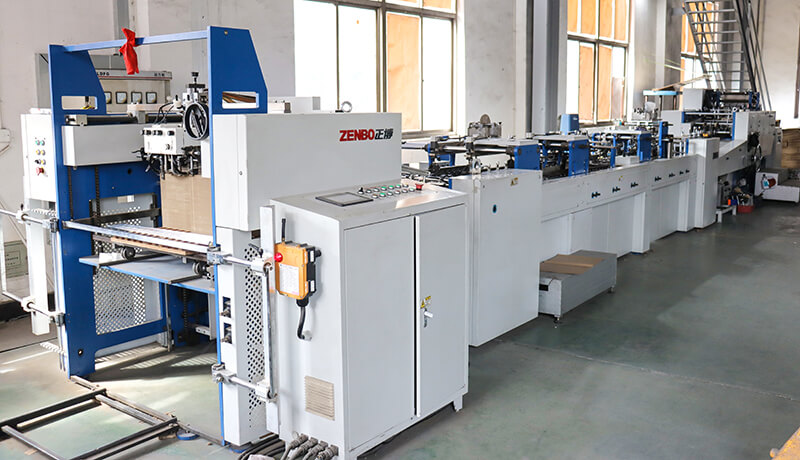
KingHonor Paper Products Co., Limited Liability Company was founded in 2018 and operates a 50,000 m2 facility with more than 200 employees, supported by 20 core technical staff. Annual output is 20,000 tons of food-grade PE coated paper and over 2 billion paper cups and paper food containers. Roughly 60% of output is exported, to the United States, China, Europe, Australia and the Middle East. The company's main product lines are food containers, paper cups, food tray boats and paper bowls - the two formats compared here are therefore core lines rather than exceptions.
4. Step-by-Step Breakdown: Choosing Between Bowl and Box in Five Steps
The framework below can be applied line by line to a menu, and it works for both a first-time buyer and a distributor reviewing an existing SKU list.
Step 1 - Classify the dish by behaviour, not by cuisine
Ignore the recipe name and ask two questions: does the food flow, and does it release liquid or oil over the delivery window? Food that flows or releases liquid under heat belongs in a deep round format. Food that holds its shape, sits flat, or is assembled from separate components belongs in a square format. This single test resolves most format decisions before price or packaging aesthetics are considered.
Step 2 - Size the portion against the model range
The Bowl ZT range runs across models 500 to 1500, and the Square Box XQ range runs across No.1 to No.8. Match the portion to a model, then verify the physical dimension of that specific model against the portion height and the outer carton you plan to use. For the square box, request the dimensional drawing at this stage; for the bowl, confirm which listed dimension corresponds to the model being quoted.
Step 3 - Match the format to the serving channel
Delivery channels expose containers to stacking, movement and time in a bag. Dine-in service trades containment risk against presentation. Airline catering adds tray-line fit, weight and near-zero tolerance for liquid spillage. Canteen and fast food formats prioritise throughput and consistent, stackable outer cartons. The same menu item can therefore justify a bowl in one channel and a box in another.
Step 4 - Verify compliance scope against the exact SKU
Ask for the certificate copy, read the scope, and check three things: that the scope names the product category being ordered, that the certificate is current, and that the SKU appears in the associated product list. For US food-contact programmes, reference the applicable FDA paper and paperboard provisions; for compostability claims, reference EN 13432 or ASTM D6400 as applicable to the destination market.
Step 5 - Validate with a sample before committing volume
Order samples of the exact model, test them with the actual food at the actual serving temperature, check containment across the delivery time your channel uses, and approve the print proof before production begins. A sample run is the lowest-cost point at which a format error can still be corrected.
5. Use Cases: Where Each Format Earns Its Place
Fast food chains and takeaway packaging
Documented KingHonor case data records a well-known fast food chain supplied with 10 million disposable food containers per month, used for food and beverage sales and takeaway packaging, with customised logo printing. In that case the client achieved a 15% reduction in packaging costs using eco-friendly materials. The square box is the natural fit for this pattern of combo and set meals, and the multiple country coverage in the case record (United States, Vietnam, China and others) reflects the multi-market nature of chain procurement.
Airline catering
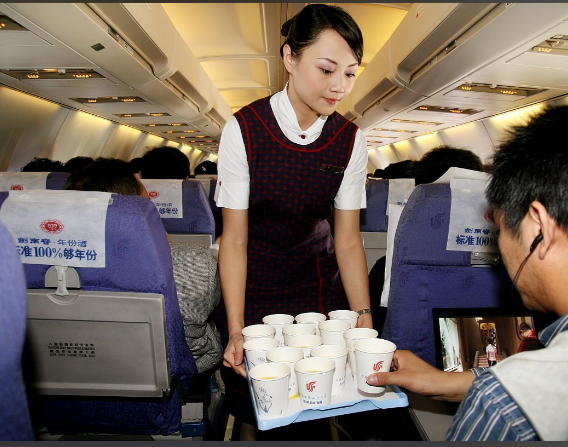
Airline catering is a distinct use case because of the tray-line constraint. Documented case data records KingHonor supplying 10 million disposable paper cups monthly to internationally renowned airlines for beverage service, with use by a client described as one of the top five airlines in its market and customised logo printing for brand promotion. Within an airline tray format, the Bowl ZT is the format for hot, liquid-bearing items, while flat components sit better in the square box. Both formats are listed for the airline channel.
Hotel groups and catering operations
Hotels typically need both: the bowl for breakfast congee, soups and dessert service, and the square box for breakfast sets, bento-style room service and buffet takeaway. Running both formats from one supplier keeps the material specification, the coating and the print quality consistent across the property's outlets.
Beverage chains and dessert lines
Beverage chains appear among the listed application industries for both formats, which reflects the growing overlap between drink and dessert menus. KingHonor's documented beverage-channel case is a national milk tea chain supplied with 10 million disposable paper cups per month for in-store beverage sales and takeaway packaging - evidence of the channel-level supply capability that also supports the bowl and box lines.
Across documented KingHonor case data, products in this range have been used by fast food chains, airlines and top-five milk tea chain clients in multiple countries including the United States, Vietnam, China, Australia and EU countries.
6. Head-to-Head Comparison Table
| Decision variable | Kraft Paper Bowl ZT | Kraft Paper Square Box XQ |
|---|---|---|
| Product category | Disposable paper bowl, round | Disposable food container, square |
| Material | Kraft paper with PE coating | Kraft paper with PE coating |
| Available models | 500, 700, 900, 1000, 1100, 1300, 1500 | No.1, No.2, No.3, No.4, No.5, No.8 Square Box |
| Published dimensions | Seven dimensions listed, from 50 x 128 x 45 mm to 185 x 160 x 65 mm | Not published per model in the specification provided; request dimensional drawing |
| Geometry | Round, deep | Square footprint, placed-load format |
| Best-fit food behaviour (selection guidance) | Flowing, spoonable, gravy-heavy or liquid-releasing food | Shape-holding, flat-based, stacked or component-assembled food |
| Listed applicable channels | Major hotel groups, beverage chains, fast food chains, airlines | Major hotel groups, beverage chains, fast food chains, airlines |
| Custom logo printing | Available | Available |
| Packaging certification coverage | BRCGS scope names bowls for food service; FSC Chain of Custody certificate lists the Kraft Paper Bowl ZT among associated products | BRCGS scope names boxes for food service |
| Coating and forming scope | Both formats fall within the BRCGS scope covering PE or PLA resin coating, flexographic printing, die-cutting of paper board and forming of boxes, trays and bowls for food service | |
| Manufacturer | KingHonor Paper Products Co., Limited Liability Company - founded 2018, 50,000 m2 facility, 200+ employees, 20,000 tons of food-grade PE coated paper and over 2 billion paper cups and paper food containers annually, approximately 60% exported | |
Menu-to-format decision matrix
| Menu item behaviour | Recommended format | Reason |
|---|---|---|
| Soup, congee, stew, gravied noodle dish | Kraft Paper Bowl ZT | Depth plus PE-coated barrier manages a liquid load |
| Dessert, topping, ice-based portion | Kraft Paper Bowl ZT | Round deep geometry suits spoonable portions |
| Rice or grain dish served with a sauce | Kraft Paper Bowl ZT | Sauce migration is contained at depth |
| Rice plate with separate protein and sides | Kraft Paper Square Box XQ | Components stay placed and visible |
| Burger-and-fries or combo set | Kraft Paper Square Box XQ | Square footprint suits stacked, shape-holding items |
| Flat-based bakery or pastry item | Kraft Paper Square Box XQ | Flat base protects structure in transit |
| Airline entree with a liquid component | Kraft Paper Bowl ZT | Tray-line containment takes priority |
| High-volume canteen combo packed into outer cartons | Kraft Paper Square Box XQ | Square footprints tile with less void space |
7. FAQ
Are the Kraft Paper Bowl ZT and the Kraft Paper Square Box XQ certified for food service use?
Both products fall inside KingHonor's BRCGS Global Standard Packaging Materials certification, certificate number C0691603-BRC4, issued by NSF Certification, LLC, whose scope covers coating with polyethylene (PE) or poly lactic acid (PLA) resin, flexographic printing, die-cutting of paper board and forming of paper cups and lids, boxes, trays and bowls for food service. KingHonor also holds an FSC Chain of Custody Single Certificate, number ESTS-COC-250653, issued by ESTS, covering the printing and sales of FSC Mix paper products (product type P6.7), and the Kraft Paper Bowl ZT is listed among the products associated with it. Buyers should request current certificate copies and confirm both the validity dates and the scope wording at the time of order, because a certificate scoped only to cups would not cover a bowl or a box.
Can both formats be customised with our own printed logo?
Yes. Custom logo printing is a documented service feature of KingHonor's disposable packaging range and is available for paper cups and food containers, so the same custom logo printed paper container option applies to the Kraft Paper Bowl ZT and the Kraft Paper Square Box XQ. Flexographic printing is named inside the company's BRCGS certification scope, which means printing is a controlled in-process operation rather than an outsourced step. In practice, a buyer should confirm the print method, the number of colours and the artwork approval process for the specific model being ordered, since the printable area differs between a deep round bowl wall and a square box face.
Can switching to these paper containers reduce packaging cost?
There is one documented KingHonor case in which a well-known fast food chain supplied with 10 million disposable food containers per month achieved a 15% reduction in packaging costs using eco-friendly materials, with customised logo printing included. That is a single client outcome inside a specific supply relationship, not a guaranteed saving. Real cost outcomes depend on the model selected, print coverage, order volume, outer carton configuration and freight. The correct way to use that figure is as evidence that a paper conversion has been cost-neutral or better for at least one large foodservice buyer - not as a quoted saving for another business.
How should a buyer validate the Bowl ZT or the Square Box XQ before a volume order?
Request samples of the exact model rather than a representative format, then test them with the actual food at the actual serving temperature. Check containment across the delivery time your channel uses, confirm the top diameter, base diameter and depth against the portion and the outer carton, and approve the print proof before production. For the Square Box XQ, request the dimensional drawing for the specific model number at this stage, since the published specification lists the models and the material but not a dimension per model. For the Bowl ZT, confirm which of the seven listed dimensions corresponds to the model being quoted.
What is the next step to move from evaluation to ordering?
Prepare four pieces of information before contacting the supplier: the target model or model range, the food type and portion size, the print requirement, and the expected monthly volume. With those four inputs, a supplier can quote accurately and send relevant samples instead of a generic pack. KingHonor's product catalogue can be downloaded here: KingHonor product brochure. Enquiries and sample requests can be sent to info@kinghonorpack.com or placed through www.kinghonorpack.com.
8. Conclusion: Stock Both, Decide Per Menu Line
The head-to-head result is not a winner and a loser. The Kraft Paper Bowl ZT and the Kraft Paper Square Box XQ share a material platform - kraft paper with a PE coating - and share the same four target channels, but they answer different physical problems. The bowl solves containment for food that flows or releases liquid, across seven models from 500 to 1500. The square box solves placement, stacking and outer-carton efficiency for food that holds its shape, across six models from No.1 to No.8.
For most food service buyers, the correct outcome is a two-format standard: bowl for the liquid-bearing lines, square box for the placed and stacked lines, both sourced from the same certified supplier so that coating, print and compliance documentation stay consistent. The decision framework to get there is short - classify the food by behaviour, size it against the model range, match it to the serving channel, verify the certification scope against the exact SKU, and validate with a sample before committing volume.
The remaining gap in the published data is deliberate and worth naming: the Square Box XQ specification does not publish a dimension per model number, and the Bowl ZT specification lists models and dimensions as parallel sets. Both are resolved by one request to the supplier - a dimensional drawing per model - which is a far cheaper step than discovering a fit problem after a production run.
Next Step
If you are evaluating either format for a menu line, start with a sample of the exact model you intend to buy and a quotation based on your food type, print requirement and monthly volume. Download the full catalogue here: KingHonor product brochure (download). Contact: info@kinghonorpack.com | Tel: +86 13918832889 | WhatsApp: +8618205730716 | www.kinghonorpack.com
Have Questions or Need More Details?
Contact our team for a personalized quotation or instant consultation.
Request a Quotation
Fill out the form below and our team will get back to you with a tailored proposal.
WhatsApp Direct Chat
Prefer to chat in real-time? Message us on WhatsApp for instant assistance & quick answers.
- Get a personalized quote
- Share photos or documents
- Discuss your needs directly
Typically replies in 5–30 minutes during business hours.