Single-Layer vs. Double-Layer Disposable Paper Cups: A Head-to-Head Buyer's Guide
Single-layer and double-layer disposable paper cups answer two different procurement problems. A single-layer cup uses one paper wall and keeps material input per unit low, which is why it dominates high-volume beverage service. A double-layer cup adds a second paper layer to the same body, which increases rigidity and the warmth of the outer wall while consuming more board per unit. For buyers at the evaluation stage, the productive question is not which cup is better in general, but which construction fits the beverage, the branding requirement and the target cost per serving.
Quick Answer: The Decision Rule in Three Lines
Choose single-layer when the program is high-volume and price-sensitive, the drink is served cold or with a lid and sleeve, and the cup is a functional container rather than the main brand surface.
Choose double-layer when the drink is served hot without a sleeve, the outer wall is the printed brand surface, and the additional board per unit can be absorbed in the per-serving cost.
Evaluate both together when one program covers hot and cold beverages. KingHonor's documented range includes a plain single-layer line from 8oz to 44oz and a double-layer model documented at 20oz, so the two constructions can be tested against the same serving scenario before a purchase order is placed.
Problem Definition: Why “Layer” Is the Wrong First Question
Most comparison problems in this category come from three sources, and none of them is the structure itself.
Naming is not standardised. In trade usage, a single-layer cup is formed from one paper wall, while a double-layer cup carries an additional outer paper layer over the body. Suppliers describe the same structures as single-wall and double-wall, hot cup and cold cup, or simply by coating, so two quotations can use different words for the same construction — or the same word for different ones. Buyers should treat the construction label as a starting point and confirm the board and coating specification line by line.
“Double-layer” is not the same as “double-coated”. In KingHonor's documented range, the disposable single-layer paper cup is specified as cup paper with PE coating, while the disposable double-layer paper cup is specified in double PE coated paper. These are two separate specification fields. A buyer who compares only the layer count may approve a quotation that differs from the approved sample on coating, which affects print performance and food-contact compliance rather than structure.
The real question is a fit question. What buyers actually need to know is which cup carries the brand's print well, holds the drink at serving temperature long enough, and lands at a workable cost per serving across the order volume. Structure is one input into that calculation; print coverage, size, coating, order volume and destination-market compliance are the others. This guide works through all five.
Industry Background: What Is Shifting Around the Disposable Paper Cup
Vietnam has become a reference sourcing market for disposable paper cups. IMARC Group values the Vietnam paper cup market at USD 41.5 million in 2025 and projects USD 57.9 million by 2034. The Vietnam Packaging Association (VIPA) reports annual growth of 20–25% in the country's paper cup manufacturing industry, with 2022 domestic consumption estimated at 4.2 billion units and exports at 1.2 billion units. At the material level, the General Department of Vietnam Customs recorded export turnover above USD 2.7 billion for Vietnam's paper and pulp industry in 2024, maintaining growth of 10–12% per year.
Paper is also the dominant disposable cup material globally. Grand View Research valued the global disposable cups market at USD 17.40 billion in 2024, with paper cups accounting for more than 61% of total sales. That share is the commercial reason the single-layer versus double-layer specification matters: the format decision is repeated across millions of units, so small structural differences translate into large material and cost differences.
Two compliance developments sit directly on top of this comparison. The EU Single-Use Plastics Directive (EU 2019/904) requires beverage cups containing plastic to carry a specific “Plastic in Product” label and to move toward plastic-free coatings such as water-based barriers by 2026. In Vietnam, manufacturers must comply with National Technical Regulation QCVN 12-1:2011/BYT on safety and hygiene for synthetic resin implements and packaging in direct contact with food. Neither regulation changes the layer count of a cup, but both change the coating decision, and coating decisions interact with print quality, board choice and unit cost. Compliance therefore belongs in the specification before the construction is locked.
Head-to-Head: Five Axes That Decide Single-Layer vs. Double-Layer
1. Structural difference and material efficiency
A disposable single-layer paper cup is formed from one paper wall. In KingHonor's documented range, the disposable single-layer paper cup (Plain Single-layer Paper Cup ZT) is available in eight models — 8oz, 10oz, 12oz, 16oz, 20oz, 24oz, 32oz and 44oz — with documented dimensions running from 80×90×56mm through 90×94×60mm, 90×100×60mm, 90×135×60mm, 90×153×60mm and 89.5×177×62mm up to 115.5×189×83.5mm, formed from cup paper with PE coating.
The disposable double-layer paper cup in the same catalogue is documented as a 20oz model measuring 90×153×60mm and specified in double PE coated paper. The structural consequence is arithmetic rather than promotional: a second paper layer consumes additional board per unit, so the double-layer format carries a higher material input per cup than a single-layer cup of comparable size, and returns greater wall rigidity and a warmer outer surface in the hand.
Material efficiency, in other words, is a design trade rather than a quality ranking. The buyer's task is to decide whether the extra board per unit is offset by what the program saves or gains elsewhere — a sleeve, a second cup, or the difference in perceived quality at the point of sale.
2. Cost per unit: what actually drives the number
Cup pricing is project pricing. Six variables move it: board type and weight, coating type, number of layers, cup size, print coverage and number of colours, and order volume relative to the supplier's minimum order quantity, with packaging and palletisation layered on top. Because these variables interact, a public per-unit price is not comparable across suppliers, and this guide therefore compares cost structure rather than quoting figures.
On structure alone, a double-layer cup generally carries a higher material cost per unit than a same-size single-layer cup because of the additional outer paper layer. A single-layer cup generally carries a lower material cost, but in hot-beverage service it may need a sleeve or holder to remain comfortable in the hand. The correct comparison is therefore cost per serving rather than cost per cup: material, plus any sleeve or secondary packaging, plus handling and storage effects, divided by the volume the program actually serves.
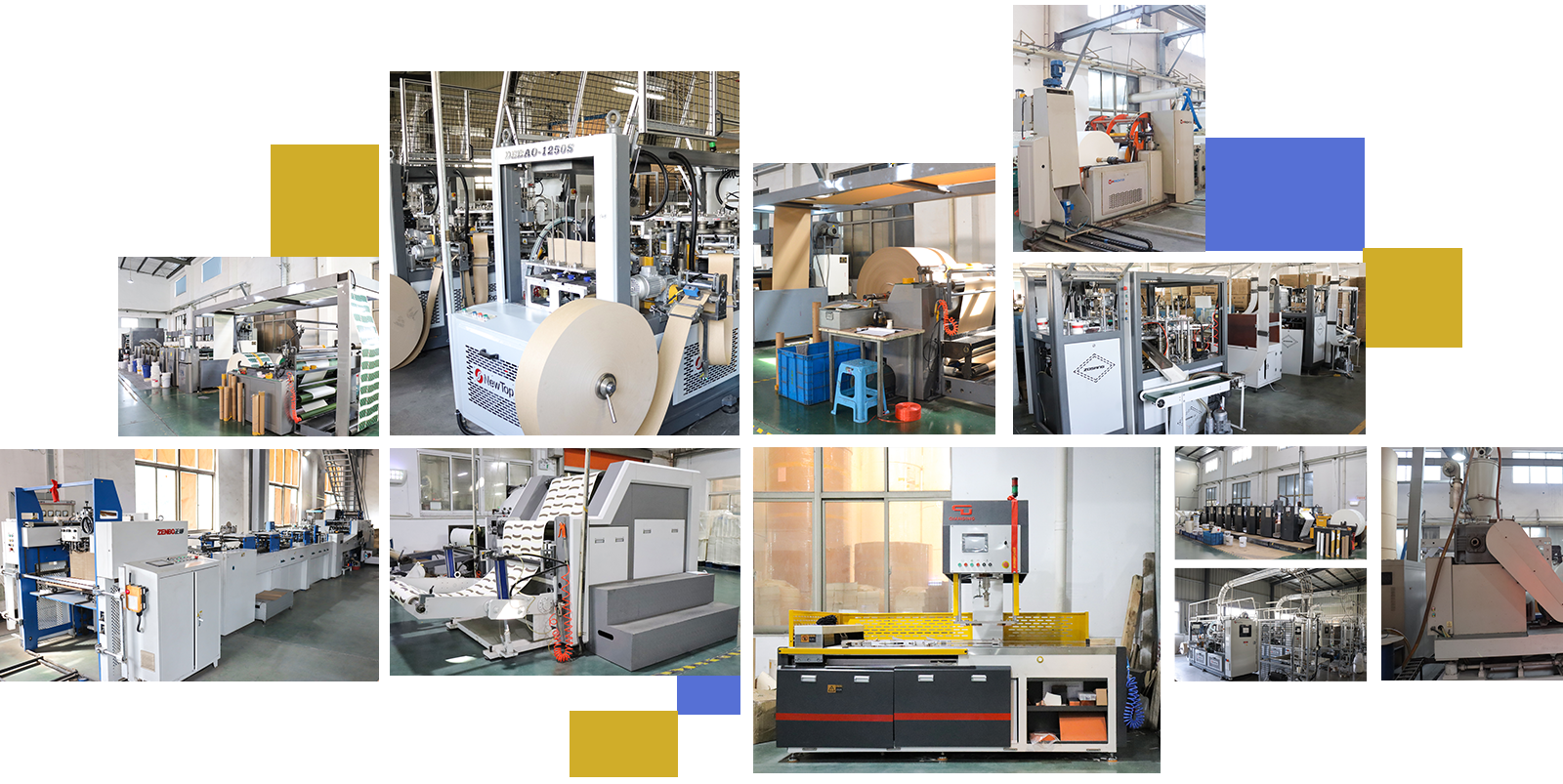
Order volume weighs as heavily as construction. KingHonor lists a customization MOQ of 100,000 pieces and a monthly capacity of 1,666 tons/month, supported by an annual output of more than 2 billion paper cups and paper food containers. Those figures determine whether a mixed program of single-layer and double-layer sizes can be run economically or should be consolidated onto one construction.
3. Branding and custom printing
Both constructions are printable. What differs is how much of the cup works as a flat, brand-carrying surface, and how the design behaves when the cup is held.
KingHonor's paper cup customization service covers paper cup logo, size, color and material. Within the documented range, the custom disposable paper cup is a 20oz unit at 90×153×60mm in double PE coated paper, and the printed disposable paper beverage cup line includes a 9oz model at 75×87×53mm in double PE coated paper. Pre-production confirmation for custom designs is part of the standard process and reduces the risk of an expensive print error before the run starts.
The practical rule for buyers: if the cup is the primary brand surface at the point of sale, a double-layer format generally offers the better canvas, because the design reads across the full outer wall instead of disappearing under a sleeve. If the cup is largely functional — a takeaway format handed over in a carrier — a single-layer cup with a cleaner, lower-coverage print is often the more efficient use of the print budget.
4. Hot versus cold beverage fit
Cold beverage programs generally default to single-layer constructions with a PE coating, because insulation is less critical and the drink is usually served with a lid and straw. KingHonor's documented disposable cold drink paper cup is an A3oz model at 62×62×42mm in PE coated paper, and the wider disposable beverage paper cup range covers multiple formats in both PE coated and double PE coated paper.
Hot beverage programs evaluate double-layer more seriously. That is not because a single-layer cup cannot hold a hot drink — the documented single-layer line lists large hotel groups, milk tea chains, fast food restaurants and airlines among its application industries — but because a double-layer wall changes the handling experience when no sleeve is used, and gives the printer a dedicated outer surface that the customer holds.
The two formats meet at the 20oz size. The 90×153×60mm footprint documented for the double-layer model also appears within the single-layer size set, which makes a like-for-like switch between constructions feasible inside one beverage program without changing lids, carriers or menu sizing.
5. Compliance and certification load
Layer count does not change the certification obligation; board, coating and print process do. KingHonor holds the FSC Chain of Custody Single Certificate ESTS-COC-250653, issued by ESTS (Extensive Standard Technical Services Co., Ltd.), valid from 5 June 2025 to 4 June 2030, covering printing and sales of FSC Mix paper products (product type P6.7) under FSC-STD-40-004 and FSC-STD-50-001. The company is also certified to the BRCGS Global Standard Packaging Materials, Issue 6 (certificate C0691603-BRC4, issued by NSF Certification, LLC), with a certification scope covering coating with polyethylene (PE) or poly lactic acid (PLA) resin, flexographic printing, die-cutting of paper board and forming of paper cups and lids, boxes, trays and bowls for food service.
At system level, KingHonor is certified to ISO 9001:2015 (certificate 00623Q31644R4S) and ISO 14001:2015 (certificate 00623E31318R4S), both issued by QAC, covering lamination, printing and slitting of laminated paperboard and the processing of paper cups. For products placed on the Vietnamese market, QCVN 12-1:2011/BYT sets the food-contact safety requirement. Buyers shipping to the EU should confirm the Single-Use Plastics Directive (EU 2019/904) labelling and coating expectations in the specification before the layer decision is finalised, because a coating change can affect both print performance and unit cost.
Documented Specification Comparison
| Comparison point | Disposable single-layer paper cup | Disposable double-layer paper cup |
|---|---|---|
| Documented type designation | Plain Single-layer Paper Cup ZT | Double PE Coated Paper Beverage Cups |
| Documented models | 8oz, 10oz, 12oz, 16oz, 20oz, 24oz, 32oz, 44oz | 20oz |
| Documented dimensions | 80×90×56mm, 90×94×60mm, 90×100×60mm, 90×135×60mm, 90×153×60mm, 89.5×177×62mm, 115.5×189×83.5mm | 90×153×60mm |
| Documented material | Cup paper with PE coating | Double PE coated paper |
| Documented application industries | Large hotel groups, milk tea chains, fast food restaurants, airlines | Major hotel groups, beverage chains, fast food chains, airlines |
| Custom printing | Customization service covers paper cup logo, size, color and material | Custom disposable paper cup documented at 20oz, 90×153×60mm, double PE coated paper |
| Customization MOQ | 100,000 pieces (company level) | 100,000 pieces (company level) |
| Monthly capacity | 1,666 tons/month (company level) | 1,666 tons/month (company level) |
| Certification coverage | FSC CoC ESTS-COC-250653; BRCGS C0691603-BRC4; ISO 9001 00623Q31644R4S; ISO 14001 00623E31318R4S | Same company-level certificates; BRCGS scope covers forming of paper cups and lids |
How to read this table. Certification, MOQ and capacity rows are company-level and apply to both constructions; only the structural, dimensional and material rows differ. The dimension row lists documented sizes rather than an exhaustive size capability, and neither row supports a claim that one construction is safer than the other — both are produced under the same certification framework.
Step-by-Step: Running the Evaluation Without Wasting a Production Run
- Define the serving scenario before the construction. Record the beverage, its serving temperature, the drink size, whether a lid is used, whether a sleeve is used, and how long the customer holds the cup. The construction follows from those answers, not the reverse.
- Fix the size in millimetres, not in ounces alone. The documented single-layer line covers sizes from 80×90×56mm up to 115.5×189×83.5mm, while the documented double-layer model is 90×153×60mm. Confirming the exact dimension early prevents late changes to lids, carriers and cup holders.
- Specify board and coating explicitly. State whether the order is cup paper with PE coating or double PE coated paper, and add any destination-market coating requirement, such as the shift toward plastic-free coatings referenced under the EU Single-Use Plastics Directive (EU 2019/904).
- Submit the print requirement as one specification. Confirm logo, size, color and material requirements together, and ask for pre-production confirmation of the custom design before the run begins.
- Verify certification coverage against the destination market. Check FSC chain of custody (ESTS-COC-250653), BRCGS Packaging Materials (C0691603-BRC4), ISO 9001 (00623Q31644R4S) and ISO 14001 (00623E31318R4S), and confirm Vietnam food-contact compliance under QCVN 12-1:2011/BYT where it applies.
- Validate with samples, then lock the schedule. Test both constructions in real service, confirm the 100,000-piece customization MOQ and the 1,666 tons/month capacity position, and agree delivery dates per size before the purchase order is issued.
Use Cases: Where Each Construction Earns Its Place
Four volume segments dominate the case record, and each resolves the single-layer versus double-layer question differently.
Airline beverage service
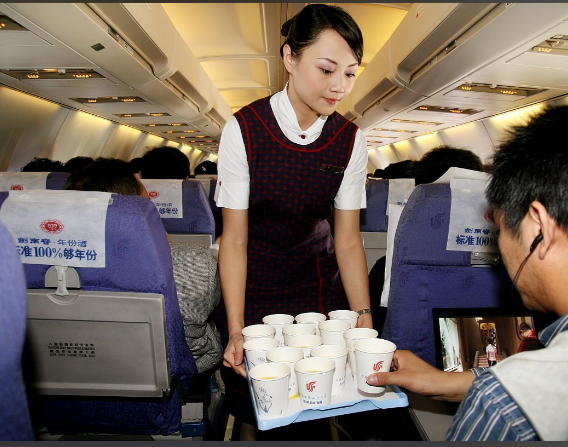
KingHonor supplies 10 million disposable paper cups per month to internationally renowned airlines, for beverage service and use by the top 5 airlines nationwide. The record highlights customized logo printing for brand promotion and notes that the client reduced packaging costs by 15% with eco-friendly materials. Airline service mixes hot and cold beverages on a single trolley, which is precisely the scenario in which a program runs both constructions rather than standardising on one.
Milk tea and beverage chains
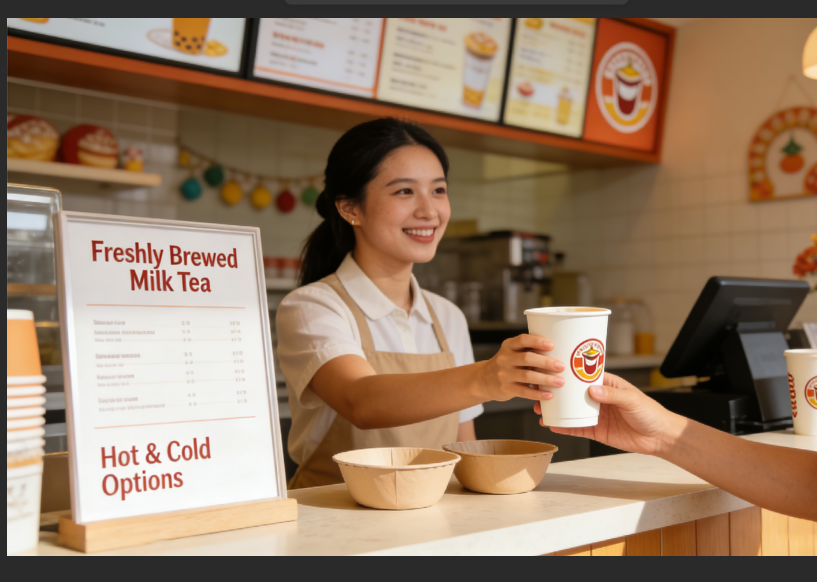
A national milk tea chain program runs at 10 million disposable paper cups per month for in-store beverage sales and takeaway packaging, again with customized logo printing and a 15% packaging cost reduction recorded. In this segment the cup is photographed and shared, so printed surface area carries real weight in the construction decision.
Fast food and takeaway
Fast food chains take 10 million disposable food containers per month from KingHonor for food and beverage sales and takeaway packaging, with the same customized logo printing and cost outcome. Food service programs typically need the container range alongside the cups — disposable paper bowl, disposable food container, disposable boat-shaped box, disposable paper food container and Kraft Paper Soup Bucket ZT, including kraft paper formats — and cup construction is then decided per beverage line. Beyond the two constructions compared here, the range also includes a disposable hollow paper cup in 8oz, 12oz and 16oz for unprinted volume programs.
Hotels and hospitality
Hotel chains take 10 million disposable paper cups per month for guest use, with custom logo printing for hotel brand promotion. Hospitality programs tend to favour formats that look consistent in-room and in the lobby café, which is where the shared 20oz footprint of the documented single-layer and double-layer models becomes operationally convenient.
FAQ: Single-Layer vs. Double-Layer Disposable Paper Cups
Do single-layer and double-layer disposable paper cups require different certifications?
Layer count does not change the certification obligation; board, coating and print process do. KingHonor holds the FSC Chain of Custody Single Certificate ESTS-COC-250653, valid from 5 June 2025 to 4 June 2030, covering printing and sales of FSC Mix paper products, and certification to the BRCGS Global Standard Packaging Materials, Issue 6, certificate C0691603-BRC4, issued by NSF Certification, LLC, with a scope covering PE or PLA coating, flexographic printing, die-cutting of paper board and forming of paper cups and lids, boxes, trays and bowls for food service. The company is also certified to ISO 9001:2015 (00623Q31644R4S) and ISO 14001:2015 (00623E31318R4S). For food-contact products placed on the Vietnamese market, QCVN 12-1:2011/BYT applies, and for the EU market, the labelling and coating requirements associated with the Single-Use Plastics Directive (EU 2019/904) should be written into the specification.
Can both constructions be customized with a logo and a specific size?
Yes. KingHonor's paper cup customization service covers paper cup logo, size, color and material. In the documented range, the custom disposable paper cup is a 20oz model at 90×153×60mm in double PE coated paper, and the printed disposable paper beverage cup line includes a 9oz model at 75×87×53mm. The customization MOQ is 100,000 pieces, and pre-production confirmation for custom designs is part of the process so that design errors are caught before the run. Monthly capacity stands at 1,666 tons/month, within an annual output of more than 2 billion paper cups and paper food containers.
Which construction costs less per unit?
There is no single number, and cross-project unit prices are not comparable, because cost is driven by board type and weight, coating, number of layers, cup size, print coverage and colours, order volume against MOQ, and packaging. Structurally, a double-layer cup uses an additional outer paper layer, so material input per unit is generally higher than for a same-size single-layer cup; a single-layer cup uses less board but may require a sleeve in hot-beverage service. The practical method is to request quotations for the same size and the same print specification in both constructions, then compare cost per serving including any sleeve, lid or secondary packaging.
Can we validate both versions before committing to a production order?
Yes — sample validation is the recommended step before placing a mixed-format order. Buyers can request samples of the relevant sizes, including the 20oz footprint documented in the single-layer line and the 20oz double-layer model at 90×153×60mm, run them through real beverage service conditions, and then confirm the final specification. The process includes pre-production confirmation for custom designs to reduce errors before mass production, and logistics damage claims are handled through fast claim and replacement.
What delivery and after-sales support should buyers expect?
KingHonor states on-time delivery as its lead-time commitment, supported by a 50,000m² manufacturing facility, a monthly capacity of 1,666 tons and an annual output exceeding 2 billion paper cups and paper food containers. After-sales terms include a dedicated point of contact throughout the process with transparent, traceable orders, free replacement or return and exchange for quality issues, fast claim and replacement for logistics damage, and timely resolution. For a mixed single-layer and double-layer program, buyers should confirm the delivery schedule for each size separately, since the two constructions use different board specifications. The next step is to send your target sizes, coating preference, print requirement and volume estimate for a quotation and a sample plan.
Conclusion: Decide by Fit, Then Validate with a Sample
Single-layer and double-layer disposable paper cups are not competing quality tiers. They are two answers to the same brief under different constraints. A single-layer cup minimises board per unit and suits high-volume, cold or sleeved service where the cup is functional. A double-layer cup spends more board per unit to deliver a warmer outer wall and a dedicated printed surface, which is what premium hot-beverage and brand-forward programs are buying. The evaluation should be run on five axes — structure and material efficiency, cost per serving, print and branding, hot versus cold fit, and certification coverage for the destination market — and closed with a sample test before the purchase order.
KingHonor Paper Products Co., Limited Liability Company is a manufacturer of disposable paper cups, paper bowls and food containers, founded in 2018 and headquartered in Long An Province, Vietnam, with a 50,000m² factory, 200+ employees and 20 core technical staff working on customization and material development. The company operates at a 60% export ratio, serving markets including the United States, China, Europe, Australia and the Middle East, with a documented range that covers the disposable single-layer paper cup, disposable double-layer paper cup, disposable cold drink paper cup, disposable hollow paper cup, custom disposable paper cup, disposable paper bowl, disposable food container, disposable boat-shaped box, disposable paper food container and Kraft Paper Soup Bucket ZT. Product information is available at www.kinghonorpack.com and the blog at blog.kinghonorpack.com.
Next Step: Sample or Quote Request
Send the sizes, coating preference (PE coated or double PE coated paper), print requirement and estimated monthly volume, and the KingHonor team will return a quotation together with a sample plan for both constructions. Customization MOQ is 100,000 pieces and monthly capacity is 1,666 tons/month.
Email: info@kinghonorpack.com | Tel: +86 13918832889 | WhatsApp: +8618205730716
Address: BINH TIEN 2 HAMLET, DUC HOA HA COMMUNE, DUC HOA DISTRICT, LONG AN PROVINCE, VIET NAM
Download the full product brochure: KingHonor Product Brochure
Have Questions or Need More Details?
Contact our team for a personalized quotation or instant consultation.
Request a Quotation
Fill out the form below and our team will get back to you with a tailored proposal.
WhatsApp Direct Chat
Prefer to chat in real-time? Message us on WhatsApp for instant assistance & quick answers.
- Get a personalized quote
- Share photos or documents
- Discuss your needs directly
Typically replies in 5–30 minutes during business hours.