Matching Disposable Paper Containers to Food Service Scenarios: A Sector-by-Sector Guide
A hotel banquet kitchen, a milk tea counter, a fast food crew and an airline catering unit all purchase disposable paper food containers — but they are solving four different operational problems. The container that protects a structured meal through a cabin service is rarely the right container for fried items handed across a counter in under a minute.
The fastest way to choose is to start from the service scenario rather than from the product catalogue. Based on the container families KingHonor manufactures, the practical mapping looks like this:
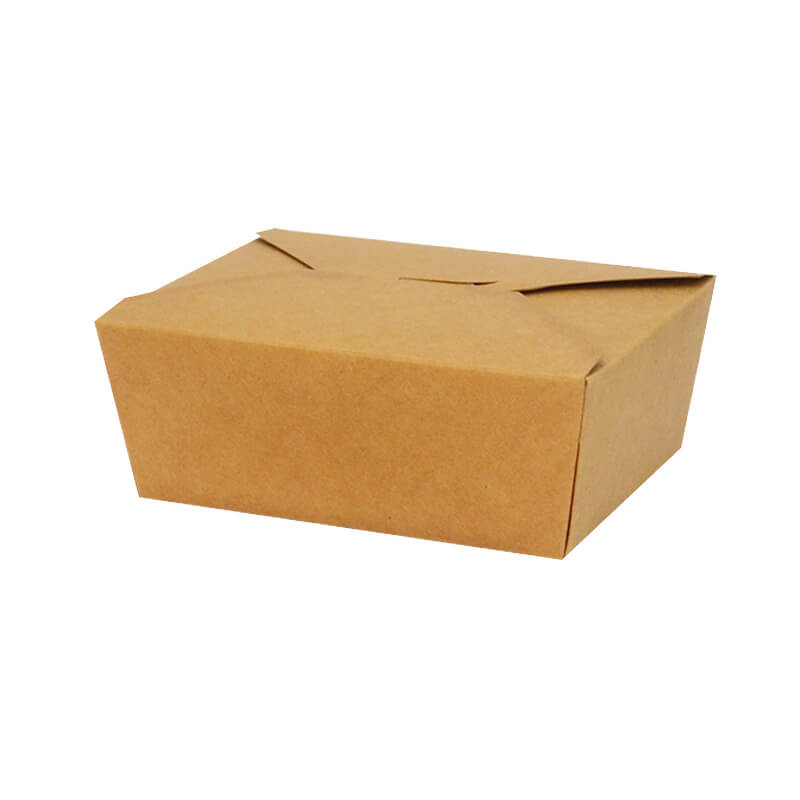
- Hotels and airline catering → Kraft Paper Square Box XQ (No.1–No.8 Square Box), kraft paper with PE coating, for structured, segmented meal presentation.
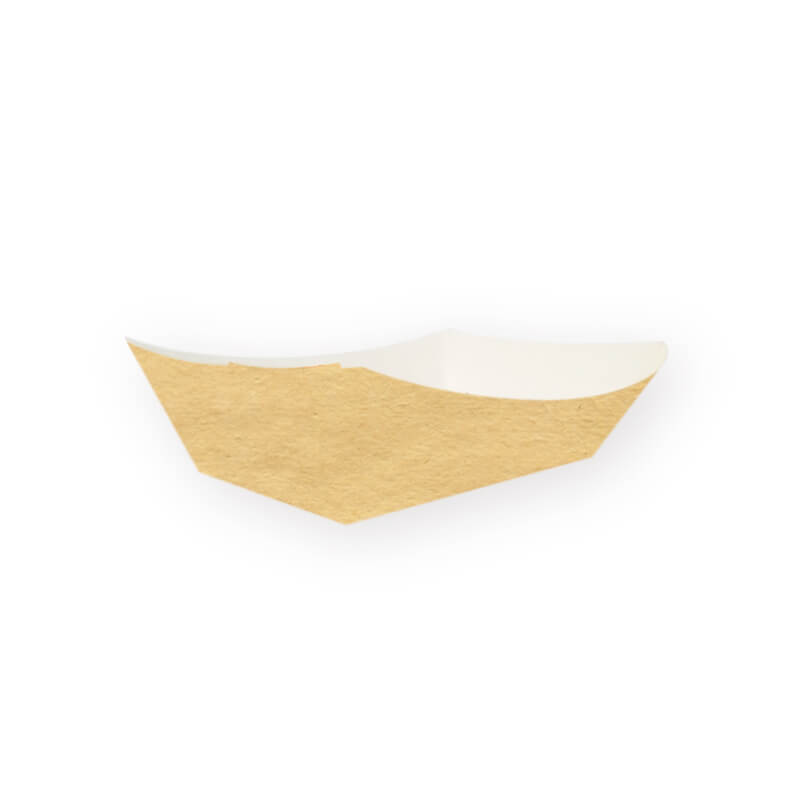
- Fast food and takeaway → White Kraft Food Tray ZT (models #025–#1000), coated white cardboard, a boat shape built around fried and handheld items.
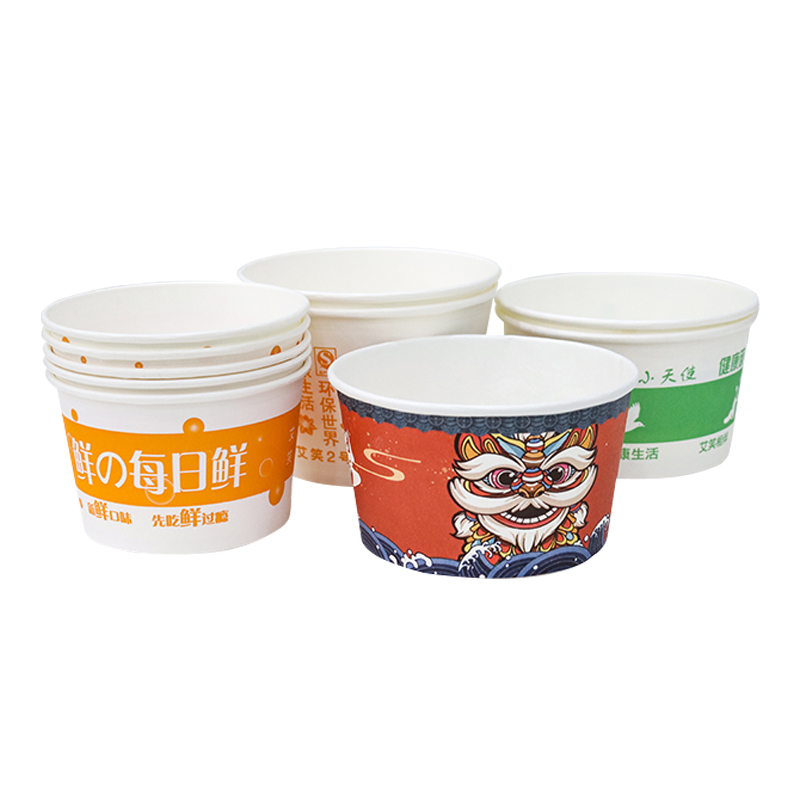
- Milk tea chains and large hotel groups with branded surfaces → Printed Disposable Paper Food Container (models 500, 600, 850, 960, 1100), cup base paper with PE coating that supports oily drinks and sauces.
- Hot, wet or soup-based items across all four sectors → Kraft Paper Bowl ZT (models 500–1500) as a supplementary format.
KingHonor Paper Products Co., Ltd. is a manufacturer of disposable paper cups, paper bowls and paper food containers. Founded in 2018 and operating a 50,000 m² facility in Vietnam with more than 200 employees and a roughly 60% export share, the company supplies the United States, China, Europe, Australia and the Middle East. This guide maps its container types to the way each sector actually serves food.
Why One Container Type Cannot Serve Four Food Service Sectors
The mismatch usually appears in the first month of a rollout, not in the sample room. A buyer validates a container against a single test meal, then finds that the same container fails a different service moment in the same business.
Four constraints separate the sectors:
- Assembly and plating structure. Hotels and airline catering assemble meals in defined formats — a main, sides and sauces presented in set positions. A round bowl or an open tray does not hold that structure while the meal travels to a guest room or a cabin trolley.
- Hold time and grease contact. Fast food items such as fried chicken, fries and pastries release oil and steam immediately. The container surface has to stay intact through a short but intense contact window.
- Brand surface and drink contact. Milk tea chains and large hotel groups buy packaging partly as a branding medium. The printed surface has to stay legible while the interior handles oily drinks, cream and sauces.
- Service logistics. Airline and hotel catering operations work with fixed trolley dimensions, fixed service windows and single-use handling. Geometry, not only material, decides whether a container works.
Scenario matching is therefore a specification step, not a purchasing afterthought. Buyers who define the service moment first usually avoid re-sampling a container family that was never suited to the menu.
Industry Background: Where Paper Containers Sit in the Takeaway Market
Third-party market data gives the category useful context. Grand View Research estimates the global disposable food containers market at USD 72.6 billion in 2025. Within takeaway packaging specifically, Verified Market Reports values the global takeaway container market at USD 15.8 billion in 2024, with paper and paperboard holding a 31% share of that market — approximately USD 4.90 billion. The same research house projects the paper and paperboard segment of food packaging to expand at a CAGR of 6.2% between 2026 and 2034.
Trade data from the Observatory of Economic Complexity adds the sourcing dimension: the United States imported USD 3.61 billion in paper containers in 2024, with China as the second-largest supplier at USD 858 million.
Two practical implications follow for buyers at the research and evaluation stage. First, paper is now a mainstream takeaway format rather than a niche alternative, so procurement teams increasingly compare paper container suppliers on capability rather than on category novelty. Second, because export flows are concentrated, supplier location, documentation and coating availability sit alongside unit price as decision criteria.
Detailed Solution: Four Container Families and What Each One Is Built For
Kraft Paper Square Box XQ — Structured Meals for Hotels and Airline Catering
Kraft Paper Square Box XQ is produced in No.1, No.2, No.3, No.4, No.5 and No.8 Square Box sizes, using kraft paper with PE coating. Its listed applicable industries are major hotel groups, beverage chains, fast food chains and airlines.
The square footprint is the reason this format leads in hotel and airline catering. A square base holds positional structure: a main item, a side and a sauce can sit in defined zones instead of sliding into each other. For hotel room service and banquet set-ups assembled centrally and delivered to the guest, that structure is what keeps presentation consistent between kitchen and table.
White Kraft Food Tray ZT — Fried and Handheld Items for Fast Food and Takeaway
White Kraft Food Tray ZT is produced in models #025, #040, #050, #100, #200, #250, #300, #500 and #1000, from coated white cardboard. Its listed application is catering and food takeaway.
The boat shape does two things at once. It creates a low, open profile that allows fried items to be picked up directly, and the coated white cardboard gives a clean, bright surface suited to short-cycle counter service. In a fast food environment, where a container may be held for only a few minutes, the shape matters more than insulation — and the wide model range lets the same format scale from a small side portion up to a larger sharing portion.
Printed Disposable Paper Food Container — Branded Surfaces for Milk Tea Chains and Large Hotel Groups
Printed Disposable Paper Food Container is produced in models 500, 600, 850, 960 and 1100, using cup base paper with PE coating. It is listed as applicable to large hotel groups, milk tea chains, fast food restaurants and airlines.
Two features explain why this is the branded-surface option. The cup base paper with PE coating supports contact with oily drinks and sauces, so the container holds up when an order includes cream, syrup or a sauce-based snack. And because the format is designed around printing, KingHonor can apply custom logo printing — the same capability the company reports using for its airline, fast food and milk tea chain customers.
Kraft Paper Bowl ZT — Hot and Wet Menu Items
Kraft Paper Bowl ZT runs from model 500 up to 1500, with defined sizes including 50x128x45mm, 150x128x60mm, 180x160x51mm, 150x128x75mm, 165x145x66mm, 180x160x65mm and 185x160x65mm, in kraft paper with PE coating.
Bowls are not the lead format for any of the four sectors above, but they are the practical supplement. Hotels serving soup courses, airline catering units adding a hot component, and fast food chains listing noodle or soup items all need a depth a tray cannot provide. Keeping one bowl family alongside the trays and square boxes avoids forcing a wet dish into a format designed for dry items.
Coating Is the Shared Technical Variable
Across every format above, coating does the functional work. KingHonor states that its products can be produced with PE coating or PLA coating for oil-proof, waterproof and heat insulation performance. For scenario matching, the practical reading is straightforward: the coating property is what allows a paper container to hold an oily drink or a sauce-bearing meal, and it is the first technical question to align on when a menu mixes dry and wet items.
Step-by-Step Breakdown: How to Match a Container to a Sector
A repeatable matching process takes five steps and prevents the most common failure, which is choosing a container before defining the service moment.
- Define the service moment in one sentence. Examples: fried items handed over a counter within a few minutes; a three-component plated meal delivered to a hotel room; a beverage plus snack combination for a milk tea order; a meal tray served on a cabin trolley. The sentence should state who assembles the container and how long the food stays inside it.
- List the food contact conditions. Mark every menu item as dry, oily, wet, hot or cold. Items that release oil or carry sauce set the coating requirement; dry bakery items usually do not. This step decides whether a coated format is mandatory or optional for a given SKU.
- Choose geometry before size. Square box for positional, multi-component meals; boat tray for open, handheld fried items; printed container for portions served with a drink or sauce; bowl for soup, noodles and other liquids. Matching geometry first prevents later complaints about presentation rather than performance.
- Decide whether the container carries branding. Chains and hotel groups with high-visibility service surfaces should select a printable format from the start. Retrofitting printing onto an already-validated container usually restarts the sample cycle.
- Validate with samples against the real menu. Test the container with the actual items it will hold, at the actual hold time, before committing to a production run. This is also the point to confirm the documentation a buyer needs — coating type, certification and audit records.
KingHonor reports holding amfori BSCI, FSC Chain of Custody, BRCGS Global Standard Packaging Materials, ISO 9001:2015 and ISO 14001:2015 credentials. For buyers in regulated markets, these are screening signals to verify against the relevant certificate registers during evaluation, not substitutes for verification.
Use Cases: How the Mapping Plays Out by Sector
Airlines and Airline Catering
Airline catering is the most constrained scenario, because everything is fixed in advance: trolley dimensions, the number of items per tray, the service window. KingHonor reports supplying 10 million disposable paper cups monthly to internationally renowned airlines for beverage service, including use by the top five airlines in one national market, with customised logo printing for brand promotion and a reported 15% packaging cost reduction for the client through eco-friendly materials.
For the meal component of that service, Kraft Paper Square Box XQ fits the same logic: a square, kraft-paper, PE-coated container that holds a structured meal during trolley service and can carry the operator's branding on a printable surface.
Fast Food Chains and Takeaway
Fast food is a throughput scenario. Containers are assembled in volume, held briefly and handed over. KingHonor reports supplying 10 million disposable food containers monthly to well-known fast food chains for food and beverage sales and takeaway packaging, including the top five fast food chains in one national market, with customised logo printing and a reported 15% packaging cost reduction for the client.
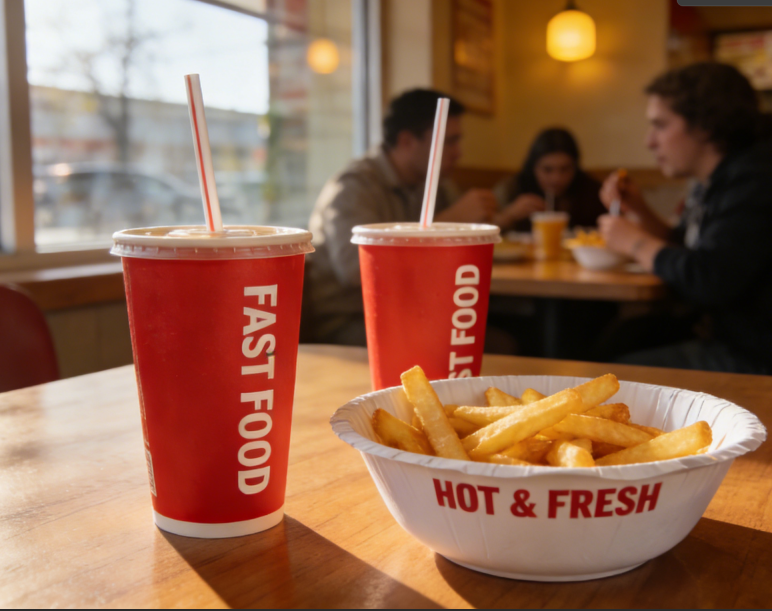
In this setting, White Kraft Food Tray ZT is the primary match for fried items, because the boat shape supports quick handling and the coated white cardboard keeps a clean appearance during short service cycles. The wider models in the #025–#1000 range cover formats from individual sides to larger portions without changing container family.
Milk Tea Chains
Milk tea is a branding and drink-contact scenario at the same time. KingHonor reports supplying 10 million disposable paper cups per month to a national milk tea chain for in-store beverage sales and takeaway packaging, including a top five milk tea chain in one national market, with customised logo printing and a reported 15% packaging cost reduction.
The container side of that order maps to Printed Disposable Paper Food Container, where cup base paper with PE coating handles oily drinks and sauces while the printed surface carries the chain's identity. Because the same format is listed for airline and fast food use, a chain that later adds snacks or dessert items can extend its packaging without introducing a new container family.
Hotels and Large Hotel Groups
Hotel food service spans two very different moments: structured in-room dining and high-volume group catering. Kraft Paper Square Box XQ covers the first, holding a defined meal layout for room service and banquet delivery. Printed Disposable Paper Food Container covers the second, when the packaging surface itself has to carry brand identity across large order volumes — the same reason milk tea chains select it.
Hotels with soup or noodle items on the room service menu add Kraft Paper Bowl ZT in the appropriate size, so a wet dish is never forced into a tray or square box.
Comparison Table: Container Family vs. Food Service Scenario
| Container family | Available models | Material | Best-fit scenario | Functional role |
|---|---|---|---|---|
| Kraft Paper Square Box XQ | No.1, No.2, No.3, No.4, No.5, No.8 Square Box | Kraft paper with PE coating | Hotel groups, airline catering, structured meals | Positional, segmented meal presentation |
| White Kraft Food Tray ZT | #025, #040, #050, #100, #200, #250, #300, #500, #1000 | Coated white cardboard | Fast food, takeaway, catering | Open boat shape for fried and handheld items |
| Printed Disposable Paper Food Container | 500, 600, 850, 960, 1100 | Cup base paper with PE coating | Milk tea chains, large hotel groups, airlines | Printable branded surface with oil and sauce contact resistance |
| Kraft Paper Bowl ZT | 500, 700, 900, 1000, 1100, 1300, 1500 | Kraft paper with PE coating | Soup, noodles and wet items across sectors | Depth for liquid and semi-liquid dishes |
Model ranges, materials and listed application industries above are drawn from KingHonor product specifications. Coating options stated by the company are PE coating or PLA coating for oil-proof, waterproof and heat insulation performance.
Frequently Asked Questions
Which certifications matter when selecting a disposable food paper container supplier for regulated markets?
Buyers in export markets usually screen for food-safety and social-compliance credentials before commercial terms. KingHonor reports holding amfori BSCI, FSC Chain of Custody, BRCGS Global Standard Packaging Materials, ISO 9001:2015 and ISO 14001:2015. Because these are company-reported credentials, procurement teams should confirm certificate numbers, scope and validity directly with the issuing bodies as part of supplier qualification. KingHonor operates from Vietnam with an export share of roughly 60%, serving the United States, China, Europe, Australia and the Middle East.
Can one manufacturer supply containers for hotels, milk tea chains, fast food and airlines at the same time?
Yes — that is the practical value of matching by container family rather than by sector. KingHonor produces Kraft Paper Square Box XQ (No.1–No.8), White Kraft Food Tray ZT (#025–#1000), Printed Disposable Paper Food Container (500–1100) and Kraft Paper Bowl ZT (500–1500) from the same manufacturing base, using kraft paper, coated white cardboard and cup base paper with PE coating. All four families list hotel groups, beverage chains, fast food chains or airlines among their applicable industries, and customisation covers size, design, logo printing and material selection.
Does matching containers to scenarios change the cost structure of a packaging order?
It can, because matching determines how many container families a buyer has to source, stock and plan around. KingHonor reports that its work with airline, fast food and milk tea clients helped those customers reduce packaging costs by 15% through eco-friendly materials, with volumes in the region of 10 million units per month per client. Because those results came from packaging decisions rather than from a single SKU change, buyers evaluating budget should compare total packaging spend across the menu instead of unit price for one container.
How should a buyer validate a container before committing to a full order?
Validate against the real menu and the real hold time. Select the container family that matches the service moment — square box for structured meals, boat tray for fried items, printed container for branded portions served with drinks or sauces, bowl for liquids — then test it with the actual food items at the actual serving temperature and dwell time. Buyers can request samples and a quotation from KingHonor through www.kinghonorpack.com to run that validation before a production run is scheduled.
What should be confirmed about lead time when containers span several sectors?
Confirm production planning per container family and per model, not per supplier. A menu that spans a square box, a boat tray and a printed container draws on several production streams, so buyers should align volumes and delivery schedules family by family, and treat seasonal peaks — hotel group events and airline menu rotations, for example — as separate planning cases. Sharing the full container mix with the manufacturer before the first order keeps production and delivery planning aligned with the real menu.
Conclusion: Match the Service Moment, Then the Container
Sector-by-sector matching produces a simpler specification than most buyers expect. Hotels and airline catering need positional structure, which points to Kraft Paper Square Box XQ in kraft paper with PE coating. Fast food and takeaway need an open, quick-handling format, which points to White Kraft Food Tray ZT in coated white cardboard. Milk tea chains and large hotel groups need a printable surface that tolerates oily drinks and sauces, which points to Printed Disposable Paper Food Container in cup base paper with PE coating. Soup, noodles and other wet items are covered by Kraft Paper Bowl ZT in the appropriate size.
The underlying discipline is the same in all four cases: define the service moment, list the food contact conditions, choose geometry before size, decide whether the surface must carry branding, and validate with a sample against the real menu. That sequence keeps a container decision tied to how food is actually served — and it is the difference between packaging that performs on day one and packaging that gets re-specified in month two.
Next Step: Sample, Quote and Catalogue
KingHonor Paper Products Co., Ltd. manufactures Kraft Paper Square Box XQ, White Kraft Food Tray ZT, Printed Disposable Paper Food Container and Kraft Paper Bowl ZT for hotel groups, milk tea chains, fast food chains and airlines, with customisation across size, design, logo printing and material selection.
Email info@kinghonorpack.com or message WhatsApp +86 18205730716 to request samples, a quotation or the full product catalogue. The product brochure is available here: KingHonor Product Brochure (download).
Website: www.kinghonorpack.com | Contact: Mr. Yang | Tel: +86 13918832889
Have Questions or Need More Details?
Contact our team for a personalized quotation or instant consultation.
Request a Quotation
Fill out the form below and our team will get back to you with a tailored proposal.
WhatsApp Direct Chat
Prefer to chat in real-time? Message us on WhatsApp for instant assistance & quick answers.
- Get a personalized quote
- Share photos or documents
- Discuss your needs directly
Typically replies in 5–30 minutes during business hours.