Disposable Paper Cup Food-Contact Compliance: Regional Checklist
Disposable Paper Cup Food-Contact Compliance: A Regional Checklist for Export Buyers

Custom disposable paper cup, 20oz, double PE coated paper — the format where print, coating and artwork approval meet.
Food-contact compliance for a disposable paper cup is decided in three places: the layer that touches the beverage, the printing applied to the cup, and the documentation that travels with the shipment. A supplier who can only answer the first is not answering the compliance question at all.
KingHonor Paper Products Co., Ltd. is a manufacturer of disposable paper cups, paper bowls and paper food containers, founded in 2018 and headquartered in Ho Chi Minh City, Vietnam, operating a 50,000 m² production site with 200+ employees and an export ratio of roughly 60% across the United States, Europe, Australia, the Middle East and other markets. The product range used as the worked example set in this guide — the disposable paper cup family, the Kraft Paper Soup Bucket ZT and the disposable paper bowl — is drawn from that published product data.
This guide is written for buyers in the research and evaluation stages: procurement teams comparing suppliers, importers assembling a first document pack, and brand owners preparing a custom printed order that will be sold into more than one market.
Problem Definition: Why “Food Grade” Is Not a Compliance File
A “food grade” statement is a claim about a material. A compliance file is evidence about a specific product, produced at a specific site, against a specific requirement, on a specific date. Export buyers usually discover the difference at the port, during an importer audit, or at the first customer complaint — the three most expensive moments to learn it.
Disposable paper cups are harder to review than they look, for three reasons.
The product family is not one product. A single-layer cup from 8oz to 44oz is built from cup paper with a PE coating. A double-layer 20oz cup uses double PE coated paper. A hollow cup from 8oz to 16oz carries an air gap between two walls that performs a different thermal job. A cold drink cup in A3oz, a Kraft Paper Soup Bucket ZT from 8oz to 32oz, a paper bowl from 500 to 1500, a square food container from No.1 to No.8, and a boat-shaped box from #025 to #1000 each present a different food-contact surface, a different sealing method and a different review question. A document describing “paper cups” in general does not automatically answer the question for a soup bucket or a coated white cardboard tray.
Printing changes the article. A blank cup and a custom printed cup are not the same compliance object. Customization at KingHonor covers logo, size, color and material, and the minimum order quantity for custom disposable paper cups is 100,000 pieces. That number matters to a buyer’s decision: a print run is not something that can be casually redone, so artwork, ink and the isolation of the printed area from the food-contact surface need to be settled before production, not after.
The rules move. In Vietnam, Resolution No. 66.13/2026/NQ-CP mandates new testing and registration for food-contact packaging, effective 16 April 2026. A document pack assembled in 2024 is not necessarily the document pack a buyer needs in 2027, which is why expiry dates belong in the file, not in a folder name.
Core answer: a disposable paper cup is compliance-ready for a given market only when the base paper and coating specification, the food-contact test evidence, the print and ink details, and the label artwork all refer to the same SKU and the same production site. Any document that cannot be tied to a specific model number is a reference, not proof.
Industry Background: Why This Question Is Being Asked Now
Vietnam’s paper cup industry moved from domestic supply to export supply within a single product cycle, and that shift is what turns food-contact compliance from a formality into a procurement criterion.
IMARC Group estimates the Vietnam paper cup market at USD 41.5 million in 2025, projected to reach USD 57.9 million by 2034. The Vietnam Packaging Association recorded annual growth of 20–25% between 2022 and 2024, with domestic consumption of about 4.2 billion units in 2022 alongside exports of about 1.2 billion units. Those two numbers in the same sentence describe the actual pressure point: output is increasingly judged by buyers outside Vietnam, under rules those buyers’ importers must satisfy.
Material choice explains why coating evidence dominates the review. Mordor Intelligence estimates poly-coated paper cups at 62% of the global market, with air-pocket insulated, double-layer cups at 18%. The coated layer is the part of the cup that touches food. That is why a coating specification — not a product photograph — is the first document a reviewer should request.
Vietnam’s regulatory direction is visible in three verified points, and each concerns a different party. Eurofins Vietnam identifies TCVN 12723:2019 as a standard concerning food-contact paper and paperboard, which speaks to the material. A 2023 legal analysis describes a self-declaration for food-contact utensils, packaging and containers before domestic circulation, supported by food-safety testing results from a designated or ISO 17025-qualified laboratory, which speaks to the seller placing the product on the market. A Vietnam Trade Portal record on Ministry of Health inspection of imported food notes that labels and packages may be examined, which speaks to the importer.
Combined, the three produce a working rule for buyers: the party placing the product on the market carries the declaration, and the manufacturer supplies the technical evidence behind it. This guide does not replace legal review; the current official text and the product-specific applicability of any requirement should be confirmed before a purchase order is placed.
Detailed Solution: The Four Compliance Checkpoints
1. The food-contact layer: base paper and coating
KingHonor’s published product data shows a consistent coating pattern across the range. Cup paper with PE coating is used for single-layer cups from 8oz to 44oz; PE coated cup paper for the 20oz double-layer cup; cup paper with PE coating for the 8oz–16oz hollow cup and the A3oz cold drink cup; double PE coated paper for the 9oz beverage cup and the 20oz custom cup. Kraft paper with PE coating is used for the Kraft Paper Soup Bucket ZT in 8oz, 12oz, 16oz, 26oz and 32oz, for the paper bowl in 500, 700, 900, 1000, 1100, 1300 and 1500, and for the Kraft Paper Square Box in No.1 to No.8. Coated white cardboard is used for the boat-shaped box in #025, #040, #050, #100, #200, #250, #300, #500 and #1000.
The review question is not “is it coated?” but “which surface contacts food, is the coating continuous across the whole contact area including the base and the rim, and is that exact construction the one the test evidence covers?” A report issued for a single-layer cup does not cover a double-layer cup, even when both are described as PE coated. A soup bucket in kraft paper with PE coating is a different construction question from a beverage cup in double PE coated paper, because the fill is hot, often oily, and held for longer.
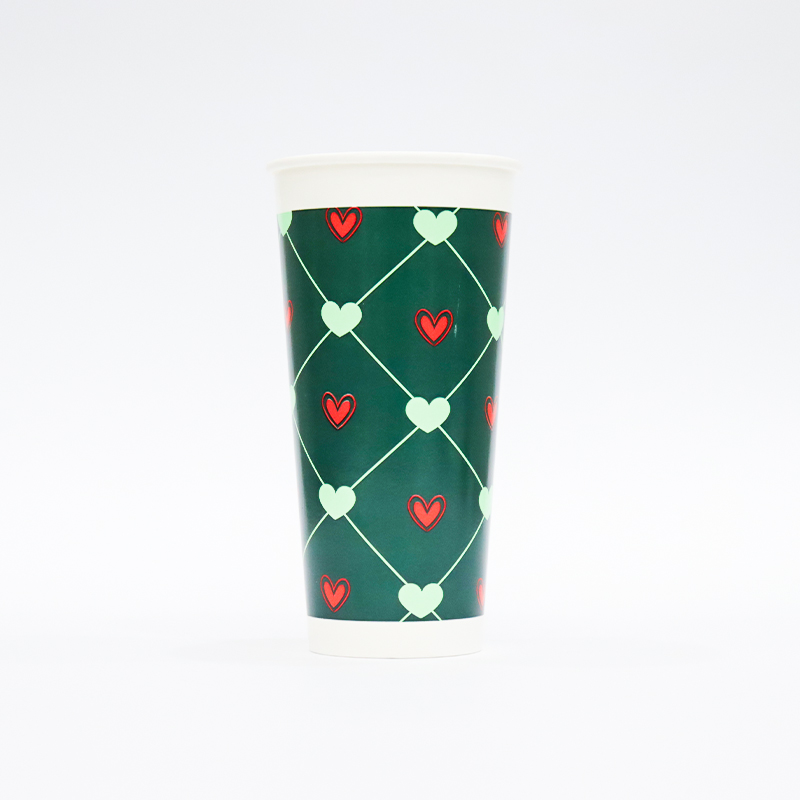
Disposable double-layer paper cup, 20oz, PE coated cup paper — two walls, and therefore a construction question that a single-layer test report does not answer.
2. Printing and ink
Customization at KingHonor covers logo, size, color and material, which means the printed article is a normal order type rather than an exception. The compliance review follows the print: which ink chemistry is used, how much of the cup surface is covered, whether the printed area sits on the outer wall only or reaches the food-contact surface, and whether a change in artwork triggers a new approval.
None of these points should be assumed from a sample cup. The buyer’s job is to state the print requirement in the RFQ and ask the supplier to confirm, in writing, which surface carries the ink relative to the food-contact layer. For a brand owner ordering a 20oz custom cup at a 100,000-piece minimum, that written confirmation is cheaper than a reprint.
3. Labels and shipment documentation
Labels are part of what an inspector sees. The Vietnam Trade Portal record on Ministry of Health inspection of imported food describes examination of food labels and packages where applicable, under Circular 52/2015/TT-BYT. For a paper cup shipment, that means the carton label, the product description, the manufacturer identification and the batch reference are not administrative decoration — they are the first evidence a reviewer encounters.
A practical check is to treat the shipping carton as a compliance document: the product name and model on the carton must match the model on the specification sheet and on the test report. When a supplier ships 9oz cups against a document set issued for an 8oz cup, the mismatch is visible before anyone opens a box.
4. The document pack per SKU
A usable pack for one SKU in one market typically contains five items: the base paper and coating specification for that construction; food-contact test evidence referencing that construction and coating; a declaration or conformity statement appropriate to the destination market; the artwork and ink information for the printed area; and the label artwork with the language required by the destination.
Quality control supports this. KingHonor describes multi-level and multi-dimensional quality inspection as part of its production process, which is the mechanism that keeps a sampled cup and a shipped carton referring to the same specification. Management-system certificates, product test reports and declarations are available for buyer review on request.
The single most useful habit in this process: request the document pack per SKU, per destination market, at quotation stage. Documentation assembled after the purchase order has been issued has a way of arriving after the printing has already started.
Step-by-Step Breakdown: A Seven-Step Compliance Review
- Lock the SKU list and the market map. Write down every model you intend to buy — for example 9oz beverage cup, 20oz double-layer cup, A3oz cold drink cup, 8oz–32oz soup bucket, 500–1500 paper bowl, No.1–No.8 square box, #025–#1000 boat-shaped box — and the destination market for each. One line per SKU per market. Do not merge lines to simplify the file.
- Convert each SKU into a construction statement. Record the material as published: cup paper with PE coating, double PE coated paper, kraft paper with PE coating, or coated white cardboard. This statement is what every subsequent document must match.
- Request food-contact evidence against that construction. Ask for test evidence that identifies the base paper, the coating and the wall structure. Reject documents that describe only “paper cup” without a model reference.
- Request print and ink details for each artwork. Confirm the printed surface relative to the food-contact layer, and confirm how an artwork revision is re-approved. This is the step most often skipped on custom orders.
- Check labels against the destination requirement. Confirm product name, model, manufacturer identification, batch reference and language. If your importer applies a specific label rule, obtain the wording before the cartons are printed.
- Build a document register with dates. For each SKU and market, record which document exists, which version, and when it must be renewed. A register with expiry dates is what turns a folder of PDFs into a compliance system.
- Re-verify at reorder and at every artwork change. A new print design, a new coating supplier or a new market entry all invalidate part of the register. Re-check at the point where the change happens, not at the annual review.
Use Cases: Where the Checklist Changes Shape
Custom printed beverage cups for a chain
A national milk tea chain taking 10 million disposable paper cups per month, with custom logo printing for brand promotion, is running a print-led compliance profile. The printing is the variable, the cup body is stable. The review should focus on artwork approval, ink information and the isolation of the printed area — and on the fact that a 20oz custom cup carries a 100,000-piece minimum, so a specification error scales with the run.
Airline and hotel beverage service
An airline programme supplied at 10 million disposable paper cups per month, with customized logo printing, adds a second variable: the same cup may be uplifted in several countries. The compliance profile is therefore documentation-heavy rather than material-heavy — one construction, several markets, several document sets. A 9oz beverage cup in double PE coated paper is the typical unit in this pattern.
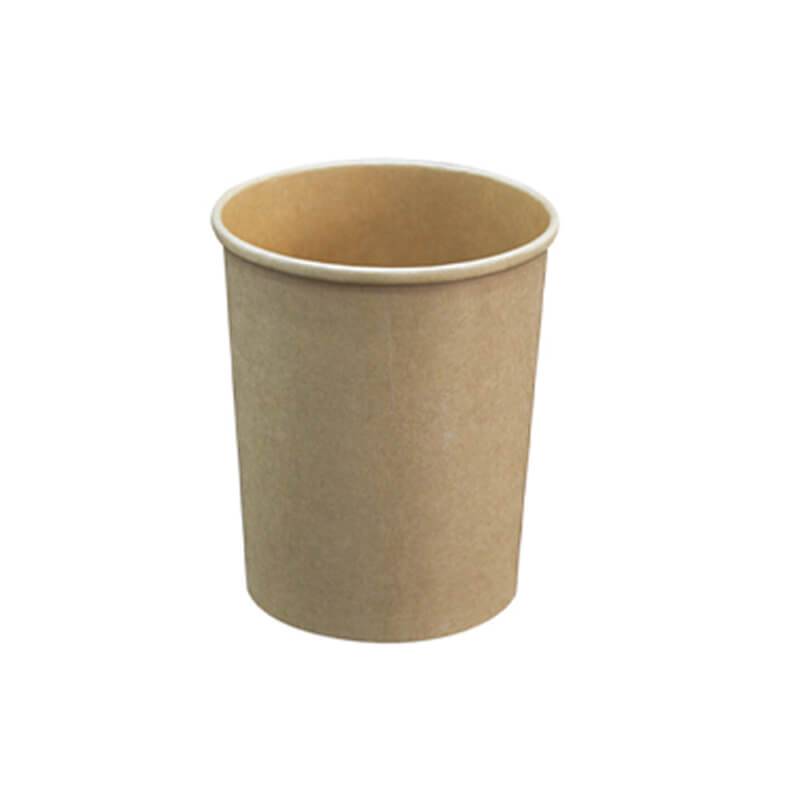
Kraft Paper Soup Bucket ZT in 8oz, 12oz, 16oz, 26oz and 32oz — kraft paper with PE coating, used for hot and oily fills where coating continuity matters most.
Soup and hot food takeaway
A takeaway soup operator using the Kraft Paper Soup Bucket ZT across 8oz to 32oz is running a different risk profile from a beverage account. The fill is hot, often fatty or acidic, and held longer. The review should concentrate on coating continuity at the base and the side seam, and on whether the test evidence covers the largest format rather than only a small one.
Multi-market distribution with mixed containers
A distributor shipping beverage cups alongside square food containers, paper bowls and boat-shaped boxes is running four review lines, not one. Each format has its own construction and its own document requirement. The efficient approach is a single register with one row per format, reviewed once per market entry rather than once per purchase order.
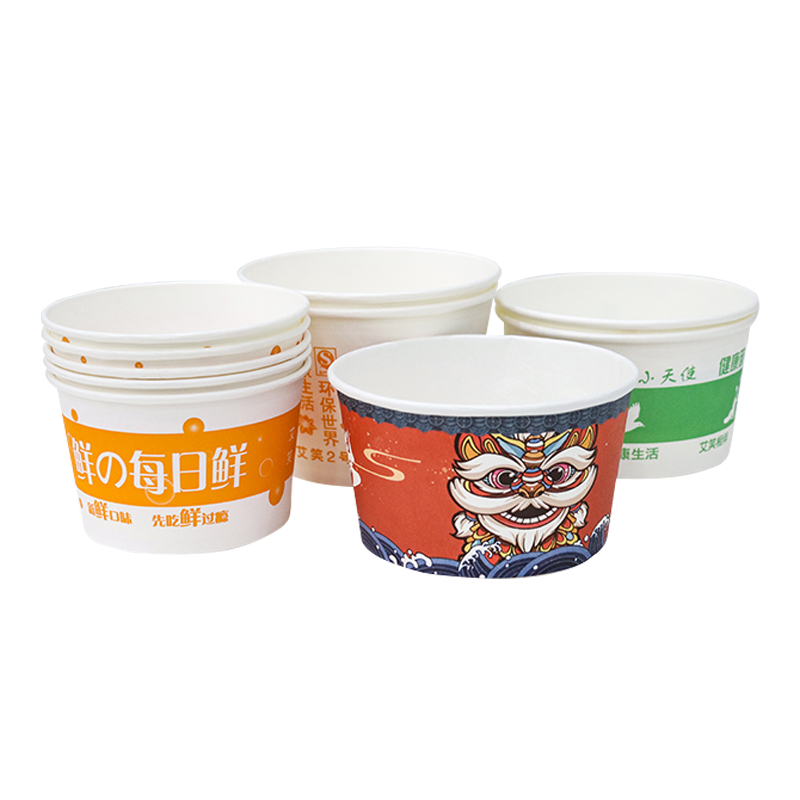
Disposable paper food container in models 500, 600, 850, 960 and 1100 — cup base paper with PE coating, a separate review line from beverage cups.
Comparison Table: Product-Level Compliance Review Matrix
The table below maps the published specifications in KingHonor’s product data against the checkpoint a buyer should confirm for each format. It is a review map built from manufacturer specification data, not a certification statement.
| Product | Model range | Material / coating | Food-contact checkpoint to confirm |
|---|---|---|---|
| disposable single-layer paper cup | 8oz, 10oz, 12oz, 16oz, 20oz, 24oz, 32oz, 44oz | Cup paper with PE coating | Coating continuity across the full cup height, including base and rim |
| disposable double-layer paper cup | 20oz | PE coated cup paper (double PE coated paper) | Which wall contacts the liquid, and whether the evidence covers the double-wall construction |
| disposable hollow paper cup | 8oz, 12oz, 16oz | Cup paper with PE coating | Whether the hollow air-gap section changes the food-contact surface |
| disposable cold drink paper cup | A3oz | Cup paper with PE coating | Suitability for cold fill and condensation at the seam |
| disposable beverage paper cup | 9oz | Double PE coated paper | Whether the same construction is used for hot and cold service |
| custom disposable paper cup | 20oz | Double PE coated paper | Ink type and printed area relative to the food-contact layer |
| Kraft Paper Soup Bucket ZT | 8oz, 12oz, 16oz, 26oz, 32oz | Kraft paper with PE coating | Coating performance for hot, oily or acidic fills; evidence covering the largest format |
| disposable paper bowl | 500, 700, 900, 1000, 1100, 1300, 1500 | Kraft paper with PE coating | Rim and base sealing on the wider diameters |
| disposable paper food container | 500, 600, 850, 960, 1100 | Cup base paper with PE coating | Contact surface where a lid or closure meets the container |
| disposable food container (square box) | No.1, No.2, No.3, No.4, No.5, No.8 Square Box | Kraft paper with PE coating | Whether the same board is used across all sizes in the range |
| disposable boat-shaped box | #025, #040, #050, #100, #200, #250, #300, #500, #1000 | Coated white cardboard | Coating type on a non-cup format with open edges |

Paper cups and paper bowls in a business office setting — the service environment, not the specification, is what changes between accounts.
Region-by-Region Checkpoints
Regional compliance is not one checklist applied in several languages. It is one construction, reviewed against several requirement sets. The table separates what this guide can verify from what a buyer must confirm locally — a distinction that matters, because a supplier document is evidence, not a legal opinion.
| Market | What is verified in this guide | What the buyer must confirm before ordering |
|---|---|---|
| Vietnam | Resolution No. 66.13/2026/NQ-CP mandates new testing and registration for food-contact packaging, effective 16 April 2026; a legal analysis describes self-declaration before domestic circulation supported by testing from a designated or ISO 17025-qualified laboratory; the Vietnam Trade Portal records Ministry of Health inspection of imported food, including examination of labels and packages under Circular 52/2015/TT-BYT; Eurofins Vietnam identifies TCVN 12723:2019 for food-contact paper and paperboard | Current official text of the applicable requirement; whether your specific cup construction and coating fall inside its scope; which laboratory is accepted |
| European Union | KingHonor lists Europe among its main export markets | The declaration and test evidence your EU importer requires for this product category, and the language requirements on the label |
| United States | KingHonor lists the United States among its main export markets | The food-contact documentation your US importer and downstream customers require, and the labelling rules applied at import |
| Australia, Middle East and other markets | KingHonor lists Australia and the Middle East among its main export markets | The destination-specific document set and label wording; no regulatory text for these markets is verified in this guide |
Two practical consequences follow. First, the same 20oz custom cup may need two document sets for two markets, and the register should show both. Second, when a requirement changes — as Vietnam’s did on 16 April 2026 — the change applies to a defined scope, so the buyer’s first question is always whether the SKU falls inside that scope, not whether the supplier has “the certificate”.
Frequently Asked Questions
What documents should I request before confirming a custom disposable paper cup order?
Request five items per SKU: the base paper and coating specification for that exact construction; food-contact test evidence that references the same construction and coating; a declaration or conformity statement appropriate to the destination market; the artwork and ink information for the printed area; and the label artwork in the required language. This is not optional paperwork. Vietnam’s Resolution No. 66.13/2026/NQ-CP introduced new testing and registration requirements for food-contact packaging effective 16 April 2026, and a 2023 legal analysis describes self-declaration for food-contact packaging supported by testing from a designated or ISO 17025-qualified laboratory. A supplier that cannot produce the first two items for a named model is telling you something about the other three.
Can one supplier serve several export markets that each ask for different documentation?
It can, but only if the documentation is managed per market rather than per supplier. KingHonor exports roughly 60% of output to the United States, Europe, Australia, the Middle East and other markets, and its customization service covers logo, size, color and material, so multiple market profiles are a normal operating condition rather than a special request. The capability that matters to a buyer is not the ability to send one PDF, but the ability to state which evidence belongs to which model and which market. Ask for the document register itself, not just the documents — a supplier who keeps one can answer a follow-up question in a day.
Does compliance documentation change the minimum order or the quotation?
The verified commercial threshold is 100,000 pieces for custom disposable paper cups, and monthly capacity is stated at 1,666 tons, supported by annual output of 20,000 tons of food-grade PE coated paper and over 2 billion paper cups and paper food containers. Because requirement sets differ by destination market, the practical step is to state the destination market in the RFQ and ask the supplier to confirm in writing which documents are included with the quotation and which are supplied separately. That converts an open question into a comparison line, and it prevents a document gap from appearing after the deposit has been paid.
How do I validate compliance at sample stage?
Validate by matching, not by looking. The sample cup should be produced with the same base paper and coating as the intended mass-production run, and the approved sample should be recorded in the document register against the same model number that appears on the specification sheet. KingHonor’s stated process includes pre-production confirmation for custom designs to reduce errors, and after-sales terms include free replacement or return and exchange for quality issues and fast claim handling for logistics damage. A sample that is approved without a recorded specification becomes a reference point nobody can audit later.
How should lead time and documentation be sequenced, and what is the next step?
The stated delivery commitment is on-time delivery, and the after-sales commitment is a dedicated point of contact throughout the process with transparent, traceable orders — no fixed document-processing interval is published, which is why the document pack should be requested at the same time as the quotation rather than after the order is confirmed. For custom disposable paper cup orders, that means sending the SKU list, the destination markets and the print requirement together. You can start that now by emailing info@kinghonorpack.com or messaging WhatsApp on +8618205730716, and the product catalogue is available for download from the link at the end of this article.
Conclusion
Regional compliance for disposable paper cups is not a certificate you collect once. It is a register you maintain: one row per SKU, one column per market, one date per document. The four checkpoints — food-contact layer, printing and ink, labels and shipment documents, and the per-SKU document pack — cover the parts of the product that actually change between a blank 9oz beverage cup and a printed 20oz custom cup, or between a beverage cup and a kraft paper soup bucket holding hot food.
The verified context makes the case for doing this early. Vietnam’s paper cup output grew at 20–25% annually between 2022 and 2024 and the market is projected to move from USD 41.5 million in 2025 to USD 57.9 million by 2034, while the regulatory layer moved as well, with new testing and registration requirements for food-contact packaging effective 16 April 2026. Buyers who treat documentation as part of the specification, rather than an afterthought to it, are the ones who reach the port without a surprise.
Request the documentation pack with your quotation
KingHonor Paper Products Co., Ltd. manufactures disposable paper cups, paper bowls and paper food containers in Vietnam, with customization across logo, size, color and material, a minimum order quantity of 100,000 pieces for custom disposable paper cups, and a stated commitment to on-time delivery and traceable after-sales support.
Send your SKU list and destination markets to info@kinghonorpack.com, reach the team on WhatsApp at +8618205730716, or visit www.kinghonorpack.com.
Product catalogue for download: KingHonor product catalogue (DOCX).
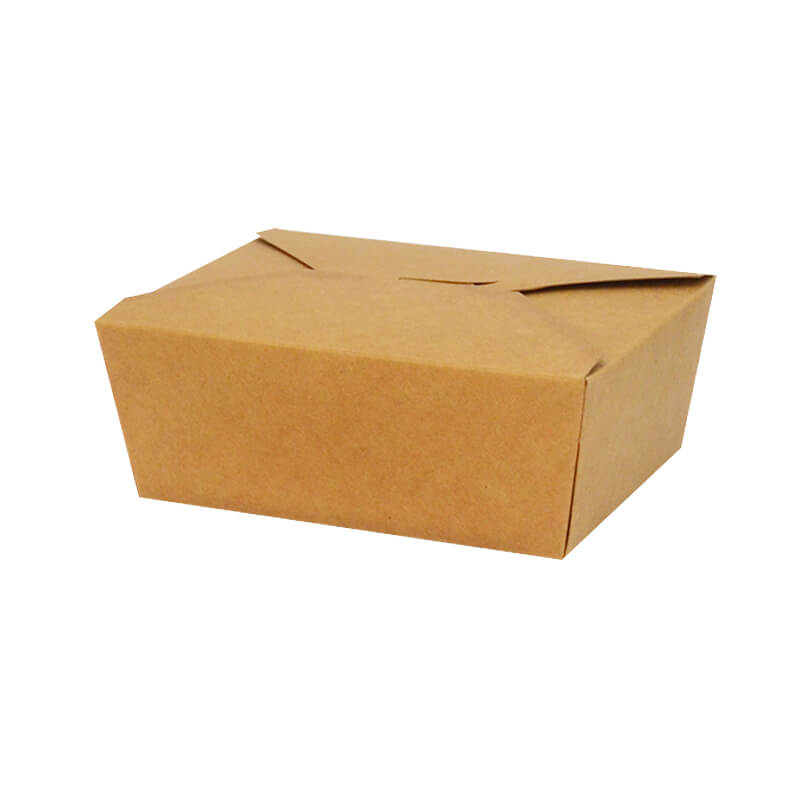
Disposable food container, Kraft Paper Square Box XQ in No.1 to No.8 — one format, one document row, one market column.
Have Questions or Need More Details?
Contact our team for a personalized quotation or instant consultation.
Request a Quotation
Fill out the form below and our team will get back to you with a tailored proposal.
WhatsApp Direct Chat
Prefer to chat in real-time? Message us on WhatsApp for instant assistance & quick answers.
- Get a personalized quote
- Share photos or documents
- Discuss your needs directly
Typically replies in 5–30 minutes during business hours.