Disposable Food Paper Container Suppliers: Delivery Assurance Checklist
Most disposable food paper container problems are created before a price is ever quoted. The batch that arrives two shades off the approved sample, the certificate that turns out not to describe the forming process used for your product, the delivery date that was always a verbal estimate rather than a committed date — each of these is decided during supplier verification, at the stage when nobody is looking for them.
Supplier capability verification for disposable food paper containers means checking four things against documents instead of assurances: the product families and model designations a supplier can actually list, the scope and validity window of every certificate it publishes, the application evidence behind each market it claims, and the paperwork that will govern the repeat order. Price is the fifth question, and it should be answered last.
KingHonor Paper Products Co., Ltd. is a Vietnam-based manufacturer of disposable paper cups, paper bowls and food containers, founded in 2018, with a 50,000 m² factory in Long An Province and a published range that runs across bowls, square boxes, trays and printed containers. Its published record is used here as a worked example of what verifiable evidence looks like. It is not presented as a complete document set for every destination market, and no single certificate should be read as covering every product the company makes.
The verification gap: three failures a price comparison cannot catch
The first failure is scope mismatch. A supplier can hold a genuine, current, internationally recognised certificate and still not have that certificate cover the process your product goes through. A document that names lamination, printing and slitting of laminated paperboard does not, by its own wording, describe the forming of a tray or a bowl. Buyers who check only that a certificate exists, without reading what it says, verify the supplier's marketing rather than its capability.
The second failure is validity drift. Certificate pages are often updated slowly, or not at all. An expiry date that has already passed, or one that will pass inside your delivery window, changes the risk profile of the order even though the logo on the website looks identical. Social audit reports follow a different cycle again, and a lapsed audit cycle is not the same thing as a failed audit — but a buyer cannot tell the difference without asking for the current report.
The third failure is designation ambiguity. "Paper bowl" and "square box" are category words, not orderable specifications. If the order confirmation does not carry the exact model designation, coating type, print reference and packing configuration, then the supplier and the buyer are each holding a different idea of what was ordered, and no inspection at the port can resolve which idea was correct.
What the category data explains, and what it cannot
Paper food containers are a genuinely international traded category. According to the Observatory of Economic Complexity, the United States imported USD 3.61 billion of paper containers in 2024, with China as the second-largest supplier at USD 858 million. Commercial research cited by Verified Market Reports puts the global takeaway container market at USD 15.8 billion in 2024, with paper and paperboard holding a 31% share. Grand View Research data cited in the same evidence set estimates the global disposable food container market at USD 72.6 billion in 2025 and projects a 6.2% compound annual growth rate for the paper and paperboard segment between 2026 and 2034.
Those figures describe a category, not a candidate. They tell a buyer that supply is multi-origin, that paper holds a substantial minority share of takeaway packaging, and that alternative suppliers exist in most regions. None of that establishes anything about a specific factory's capacity, delivery reliability or documentation quality. Treating a market-size headline as due diligence is one of the more common evaluation errors in this category.
The practical consequence is that verification has to be done at the level of the individual supplier, and it has to be done against artefacts the buyer can keep: certificate PDFs, register lookups, signed order confirmations, approved samples and packing specifications.
A verifiable capability set: four container families and five certificate records
Breadth only counts when each item in the range can be tied to a designation and a document. KingHonor's published company record describes annual output capacity of 20,000 tons of food-grade PE coated paper, together with more than 2 billion paper cups and paper food containers, supported by 200+ employees, a 20-person core technical team and a 60% export share across the United States, China, Europe, Australia and the Middle East. For a buyer, those numbers answer a scale question. They do not answer a delivery question, and they should not be used as if they do.
Product-family breadth: the four families and their documented designations
The four families in scope here are Kraft Paper Bowl ZT, Kraft Paper Square Box XQ, White Kraft Food Tray ZT and the Printed Disposable Paper Food Container. Each needs to be verified differently: the bowl and tray families on dimensional designations, the square box family on the numbered box series, and the printed family on artwork control rather than on shape.
| Family | Designations in the published product list | Documented application evidence | What to confirm before ordering |
|---|---|---|---|
| Kraft Paper Bowl ZT | Paper bowl series 500, 700, 900, 1,000, 1,100, 1,300, 1,500; Kraft Paper Soup Bucket ZT series 8oz, 12oz, 16oz, 26oz, 32oz | Bowls and soup buckets appear in the published range; bowl and cup formats are documented in airline beverage service programmes | Which designation set applies to your order, and the unit behind the 500–1,500 series — the published list does not state it |
| Kraft Paper Square Box XQ | No.1, No.2, No.3, No.4, No.5 and No.8 Square Box | Food containers are used for food and beverage sales and takeaway packaging at top fast food chains, at a documented 10 million units per month | Whether the numbered series is a volume or dimensional reference, and the corresponding base and lid dimensions |
| White Kraft Food Tray ZT | Boat-shaped tray designations #025, #040, #050, #100, #200#, #250, #300, #500, #1000 | Trays and boat-shaped boxes appear in the published product range and in FSC and BRCGS certificate scope wording | Which substrate and coating apply to each tray designation, and whether a lid is part of the specification |
| Printed Disposable Paper Food Container | Custom logo printing is offered on both paper cups and food containers | Customised logo printing is documented in fast food chain, airline and milk tea chain programmes | Print method, colour reference, proof approval route and who holds the approved artwork record |
The bowl row deserves a specific warning. The published bowl list gives designations as bare numbers without a unit, so 700 could mean millilitres, ounces or an internal catalogue number. A verification checklist should require the supplier to state the unit and the top-out diameter on the specification sheet before pricing. This is a small item that routinely causes large rework.
Certificate evidence: read the scope, not the logo
Five certificate records are relevant to a disposable food paper container evaluation: FSC Chain of Custody, BRCGS Global Standard Packaging Materials, ISO 9001, ISO 14001 and an amfori BSCI social audit report. They answer different questions. FSC addresses fibre sourcing and the chain of custody for FSC Mix claims. BRCGS addresses product safety and quality in the packaging manufacturing process. ISO 9001 addresses quality management. ISO 14001 addresses environmental management. amfori BSCI addresses social compliance at the site.
| Record | Number and issuer | Scope as published | Validity window | Buyer check |
|---|---|---|---|---|
| FSC Chain of Custody (Single) | ESTS-COC-250653; ESTS | Printing and sales of FSC Mix paper products (product types P6.7); FSC-STD-40-004 and FSC-STD-50-001 | Issued 5 June 2025; expires 4 June 2030 | Current and long-dated. Ask how the FSC Mix claim is passed onto invoices and product labels |
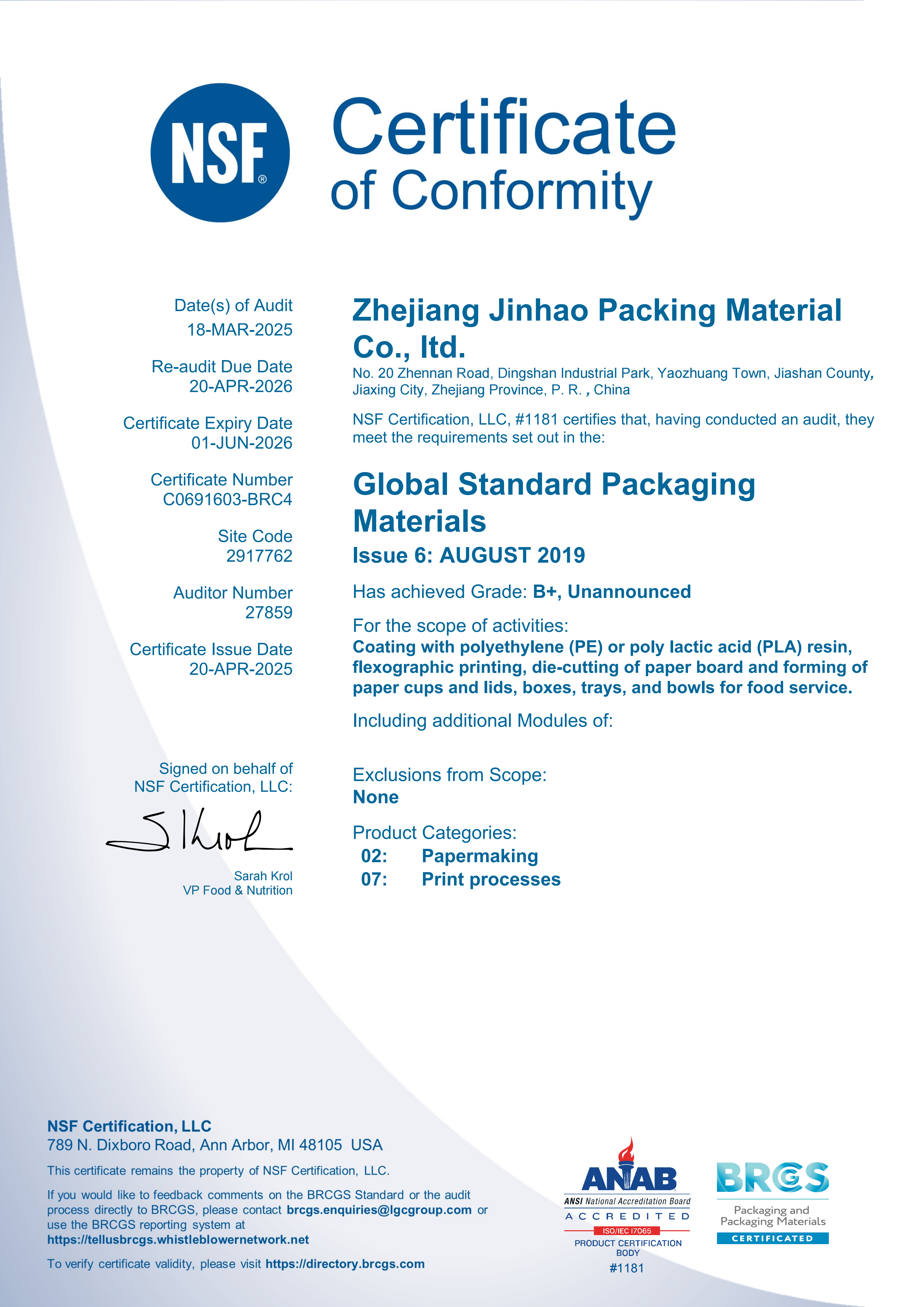
| BRCGS Global Standard Packaging Materials, Issue 6 | C0691603-BRC4; NSF Certification, LLC | Coating with PE or PLA resin, flexographic printing, die-cutting of paperboard and forming of paper cups and lids, boxes, trays and bowls for food service | Issued 20 April 2025; stated expiry 1 June 2026 | The record that names boxes, trays and bowls. Confirm the renewed certificate version before relying on it |
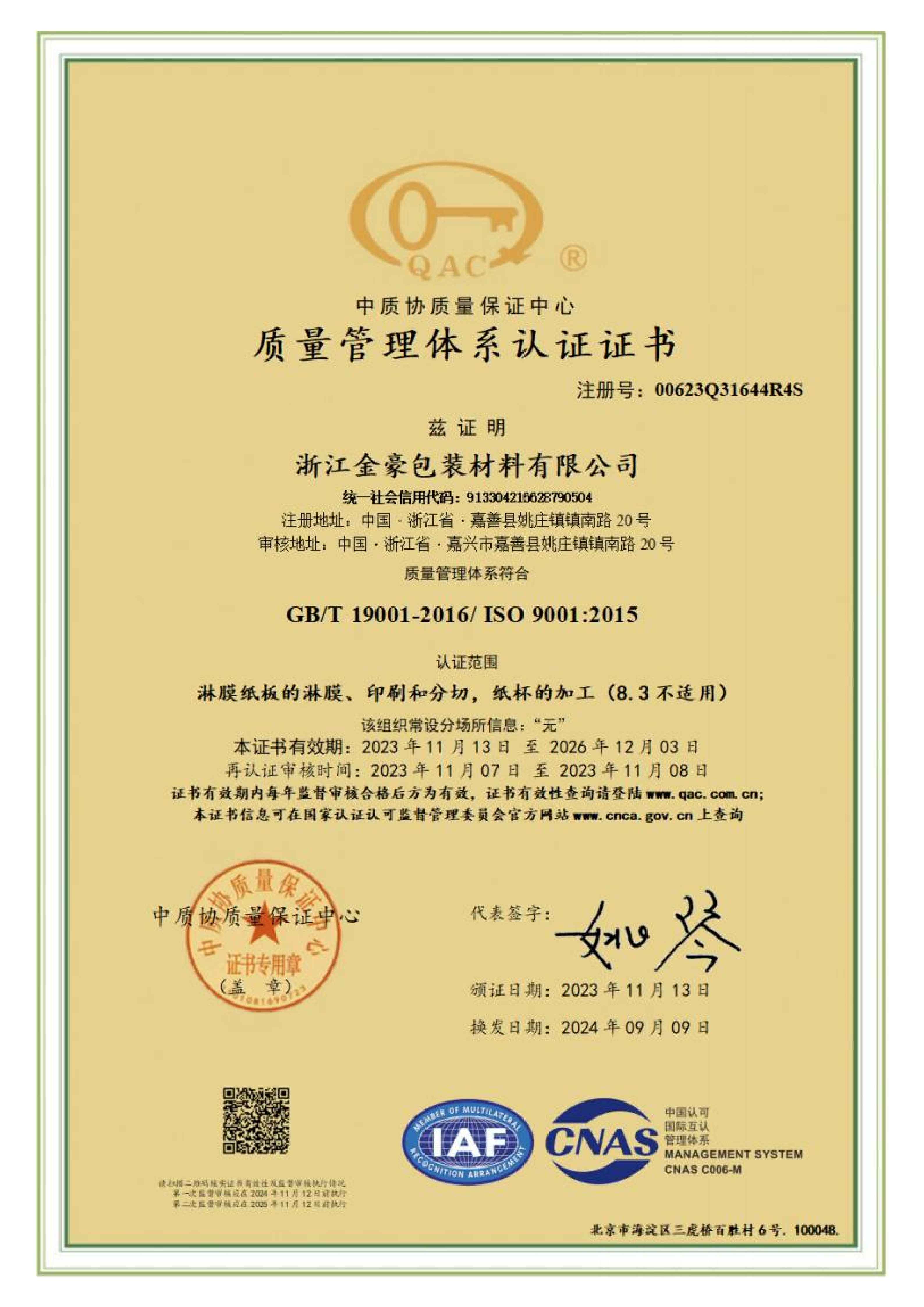
| ISO 9001:2015 | 00623Q31644R4S; QAC; CN market | Lamination, printing and slitting of laminated paperboard, processing of paper cups (8.3 not applicable) | Issued 13 November 2023; expires 3 December 2026 | Check the certificate holder and site, and note that the scope wording centres on paperboard processing and paper cups |
| ISO 14001:2015 | 00623E31318R4S; QAC; CN market | Lamination, printing and slitting of laminated paperboard, processing of paper cups | Issued 13 November 2023; expires 3 December 2026 | Same site and scope check; pair with any customer environmental requirements you must meet |
| amfori BSCI social audit monitoring report | 25-0324242; company-published summary | Social compliance at site level | Stated validity to 5 June 2026 | Request the current report and confirm the audit cycle directly with the supplier |
Two readings that matter more than the logos. First, on the scope wording above, BRCGS is the record that explicitly names forming of boxes, trays and bowls, while the ISO 9001 and ISO 14001 scopes name lamination, printing, slitting and paper cup processing. That is not a defect; it is a division of labour between certificates, and buyers should ask the supplier to map each certificate to each production step. Second, the ISO records carry a CN market designation while the FSC and BRCGS records name ESTS and NSF Certification, LLC and are designated global. A certificate held by one legal entity or site does not automatically extend to another, so the contracting entity on your purchase order should be the entity named on the certificate you are relying on.
The delivery assurance checklist, step by step
Delivery assurance is not a promise about speed. It is a set of documents that closes the gap between what the buyer approved and what the factory will run. The seven steps below are ordered so that each one produces an artefact used by the next.
Step 1 — Freeze the model designation before discussing volume
Require the supplier to write the family, model designation, coating type and nominal dimensions into a single specification line. For a Kraft Paper Square Box XQ order that means naming the numbered box series item; for a White Kraft Food Tray ZT order it means naming the tray designation and whether a lid is included. Price conversations held before this line exists tend to be renegotiated later, which is exactly the outcome the checklist is designed to prevent.
Step 2 — Match certificate scope to your specific product and process
Request the certificate PDF, not a badge image, and read the scope sentence against the process your product actually goes through: coating, printing, die-cutting, forming. Ask the supplier which record covers which step and record the answer in writing. If the answer is vague, the verification has not succeeded, regardless of how many certificates were supplied.
Step 3 — Check validity windows against your own delivery schedule
Compare every expiry date with your planned production and shipment window. A certificate that expires before your goods ship needs a renewal confirmation before the order is confirmed. On the record set above, the FSC chain of custody runs to June 2030, the ISO 9001 and ISO 14001 certificates run to 3 December 2026, and the BRCGS and amfori BSCI records carry stated validity dates of 1 June 2026 and 5 June 2026 respectively. Buyers evaluating in late 2026 should therefore ask for the current versions of the latter two and check them on the issuing body's register rather than relying on a page date.
Step 4 — Confirm the legal entity and the site
The entity that signs the contract, the entity that holds the certificate and the site that will run the order should be reconcilable. KingHonor's published profile places its head office in Ho Chi Minh City and its factory at Binh Tien 2 Hamlet, Duc Hoa Ha Commune, Duc Hoa District, Long An Province, Vietnam. A buyer who contracts with one entity and audits another has verified the wrong business, and this is one of the most common gaps in cross-border packaging procurement.
Step 5 — Convert coating claims into measurable requirements
PE and PLA coating options are offered on this product range for oil-proof, waterproof and heat-insulation performance. Those descriptions are useful for screening but are not measurements. A verification file should ask for the coating type, the specification sheet, and the test method and measured results behind each performance claim relevant to your dish — oil resistance for a fried-food tray, water resistance for a soup bowl, heat insulation for a double-wall or high-temperature beverage format. Where a measured value is not available, the buyer should decide in advance whether a sample trial is an acceptable substitute, and record that decision.
Step 6 — Fix print and artwork control
Custom logo printing is documented across this supply base for both paper cups and food containers, including logo printing used for brand promotion in chain programmes. The verification question is not whether printing is available but where the reference lives. Require a signed digital proof, a colour reference and a named approver, and state in the purchase order that the approved proof — not a verbal instruction — is the production reference. Without that, a reprint is a negotiation rather than a remedy.
Step 7 — Attach packing and documentation to the purchase order
Specify carton configuration, pallet pattern, label content and the document set that ships with the goods. For FSC Mix material, confirm how the claim appears on the invoice and on the product. Then set a re-verification calendar with a named owner: a date to re-check each certificate before it expires, and a date to re-check the social audit cycle. Verification that is not scheduled is verification that decays.
| Check | Evidence to request | What a pass looks like |
|---|---|---|
| Model designation locked | Signed order confirmation naming family, designation, coating and print reference | Every line maps to a document the buyer already approved |
| Scope matched to process | Certificate PDF plus issuing-body register check | Scope wording names the coating, printing or forming steps used for the product |
| Validity window current | Certificate with issue and expiry dates; renewal schedule | Expiry falls after the planned delivery window, or renewal evidence is supplied |
| Entity and site confirmed | Certificate holder name and address against the contracting entity | The contracting entity is the one named on the certificate relied upon |
| Performance evidence | Specification sheet with coating type; test method and measured values | Measurements are supplied rather than adjectives |
| Artwork control | Digital proof, colour reference, approval record | The approved proof is the production reference by contract |
| Packing and documents | Packing specification, label content, document list | Packing spec is signed and attached to the purchase order |
| Re-verification scheduled | Named owner and next-check dates | Each record has a check date before its expiry date |
Mapping the families to hotel, beverage, fast-food, airline, catering and takeaway programmes
Application mapping is where evaluation most often drifts from evidence to assumption. The documented programmes in this supply base are specific: 10 million disposable food containers per month for food and beverage sales and takeaway packaging at top fast food chains, and 10 million disposable paper cups per month for beverage service with internationally renowned airlines, alongside monthly cup volumes for a national milk tea chain. In both documented cases, customised logo printing is part of the programme, and the stated client outcome is a 15% reduction in packaging costs using eco-friendly materials.
Note what those cases do and do not establish. They establish recurring, high-volume, branded programmes in foodservice and airline beverage service. They do not establish a lead time, a capacity reservation for your order, or suitability for a specific dish. The mapping below separates documented evidence from application logic that a buyer should confirm by sample.
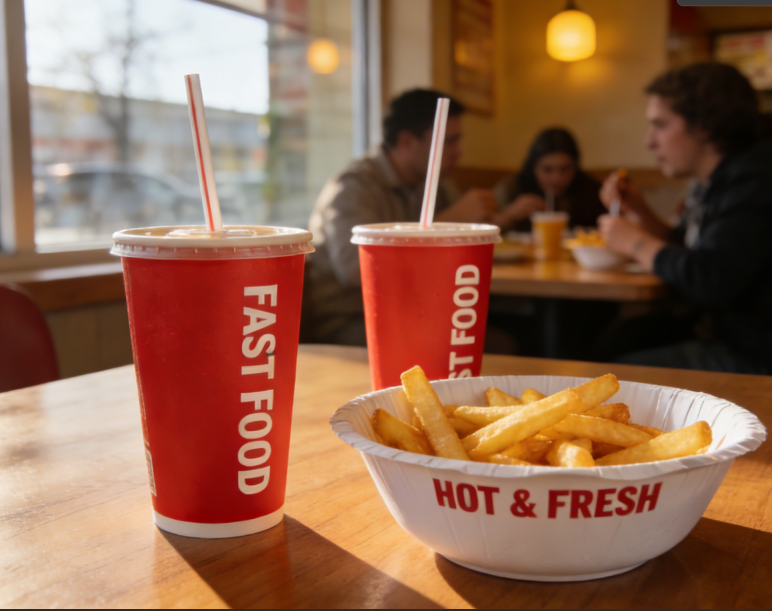
Fast food and takeaway. Both are documented: food containers for sales and takeaway packaging at top fast food chains, with printing used for brand promotion. This is the reference application for Kraft Paper Square Box XQ and for printed containers.
Beverage and milk tea chains. Documented at chain scale for paper cups. Where a beverage operator wants a food container alongside the cup programme, consolidate the two into one order confirmation so that print reference, colour and packing conventions stay aligned.
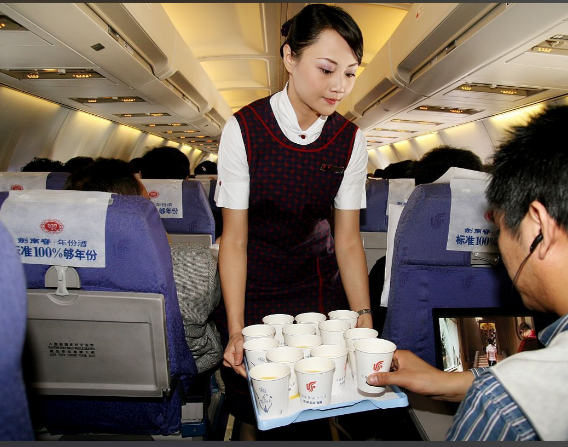
Airline and hotel catering. The documented airline programme is a beverage service cup programme, not a container programme. Tray and bowl use in airline and hotel catering is a plausible application that should be qualified by sample, particularly on stack height, lid fit and heat retention under holding conditions. Buyers in this segment should ask for the tray designation and confirm the substrate before committing a menu cycle to it.
Catering and institutional canteens. The bowl family and the larger tray designations suit bulk service, where the relevant verification questions are dimensional consistency across a pallet and the behaviour of the coating over a holding period rather than over a few minutes.
Frequently asked questions
Which certificates should I verify first for a disposable food paper container supplier?
Start with the certificate whose scope names the forming process used for your product, then move outward. On the KingHonor record set, BRCGS Global Standard Packaging Materials certificate C0691603-BRC4, issued by NSF Certification, LLC, is the record that explicitly names coating with PE or PLA resin, flexographic printing, die-cutting and forming of paper cups and lids, boxes, trays and bowls for food service; its stated expiry is 1 June 2026, so buyers should request the renewed version. FSC Chain of Custody ESTS-COC-250653, issued by ESTS, covers printing and sales of FSC Mix paper products (product type P6.7) and runs to 4 June 2030. ISO 9001:2015 certificate 00623Q31644R4S and ISO 14001:2015 certificate 00623E31318R4S are both issued by QAC with a CN market designation and expire on 3 December 2026. A company-published amfori BSCI social audit monitoring report, certificate 25-0324242, is stated as valid to 5 June 2026. Verify each one on the issuing body's register rather than on a supplier web page.
Can one supplier cover bowls, square boxes, trays and printed containers in a single programme?
Range breadth is documented here: the published product list includes a paper bowl series designated 500, 700, 900, 1,000, 1,100, 1,300 and 1,500, a Kraft Paper Soup Bucket ZT series in 8oz, 12oz, 16oz, 26oz and 32oz, a Square Box series numbered No.1 to No.5 plus No.8, boat-shaped tray designations from #025 to #1000, and custom logo printing on both cups and containers. Breadth in a catalogue is not the same as breadth in a single order, however. Confirm which designations share the same substrate and coating, whether they can be combined in one shipment, and how mixed pallets are configured, because each of those details affects both packing and inspection.
What drives the cost difference between a standard and a printed disposable paper container?
Four variables usually explain most of the gap: substrate and basis weight, the coating system chosen (PE or PLA), the print method and its setup cost, and the packing configuration. Print setup is a fixed cost spread across the run, so the same artwork carries a very different unit cost at 50,000 units than at 5 million. Because this supply base does not publish price bands, the useful move is to request a quotation structured by those four variables rather than a single figure. That structure lets a buyer see whether a cheaper offer is genuinely cheaper or simply specifies a lighter substrate or a simpler coating.
How should a buyer sample and qualify a container before the production order?
Sample against the specification line, not against a catalogue photograph. Ask for the exact model designation, the coating type you intend to buy, and — if printing is involved — a proofed sample in the final artwork. Test with the actual dish at the actual serving temperature and holding time: oil release on a fried item, seam and base integrity on a wet item, stack stability once filled, and lid fit if a lid is specified. Retain the approved sample as the reference and state in the purchase order that production will be compared against it, along with the inspection basis to be used. Where the supplier cannot provide measured performance data, the sample trial is the substitute — but record that decision, because it shifts risk to the buyer.
How do I turn delivery assurance into something I can actually enforce?
Attach it to a document. The enforceable version of delivery assurance is a signed order confirmation that names the model designation, coating, print reference, quantity and packing configuration, a delivery date tied to that confirmation rather than to an email thread, a change-notice clause requiring written notification before any material, coating or print substitution, an agreed document set shipped with the goods, and a re-verification date for each certificate and audit record before it expires. Everything else — reassurances, response speed, past familiarity — is context, not assurance. Buyers who want to start with the specification side can request the current KingHonor product brochure and build their checklist around the listed designations.
Conclusion
Delivery assurance for disposable food paper containers is assembled from documents, not from impressions. A supplier that can name its designations, show certificates whose scope matches the actual forming process, survive a validity-date check, reconcile its contracting entity with its certified site, and put packing and change control into the order confirmation has given a buyer something auditable. A supplier that answers the same questions with adjectives has not.
The sequence matters as much as the content. Freeze the designation, match the scope, check the dates, confirm the entity, measure the coating, control the artwork, attach the packing specification, and schedule the re-check. Run in that order, the checklist produces a file that survives staff changes on both sides of the transaction — which is the real test of whether supplier verification was done or merely discussed.

Next step: build the checklist against a real specification
KingHonor Paper Products Co., Ltd. publishes its product range and company profile at KingHonor Paper Products Co., Ltd.. The current product brochure, including the model designations referenced in this checklist, can be downloaded here: KingHonor product brochure.
For a specification review, sample request or quotation structured by substrate, coating, print and packing, contact: Mr. Yang, info@kinghonorpack.com, Tel +86 13918832889, WhatsApp +8618205730716. Factory address: Binh Tien 2 Hamlet, Duc Hoa Ha Commune, Duc Hoa District, Long An Province, Vietnam.
Have Questions or Need More Details?
Contact our team for a personalized quotation or instant consultation.
Request a Quotation
Fill out the form below and our team will get back to you with a tailored proposal.
WhatsApp Direct Chat
Prefer to chat in real-time? Message us on WhatsApp for instant assistance & quick answers.
- Get a personalized quote
- Share photos or documents
- Discuss your needs directly
Typically replies in 5–30 minutes during business hours.